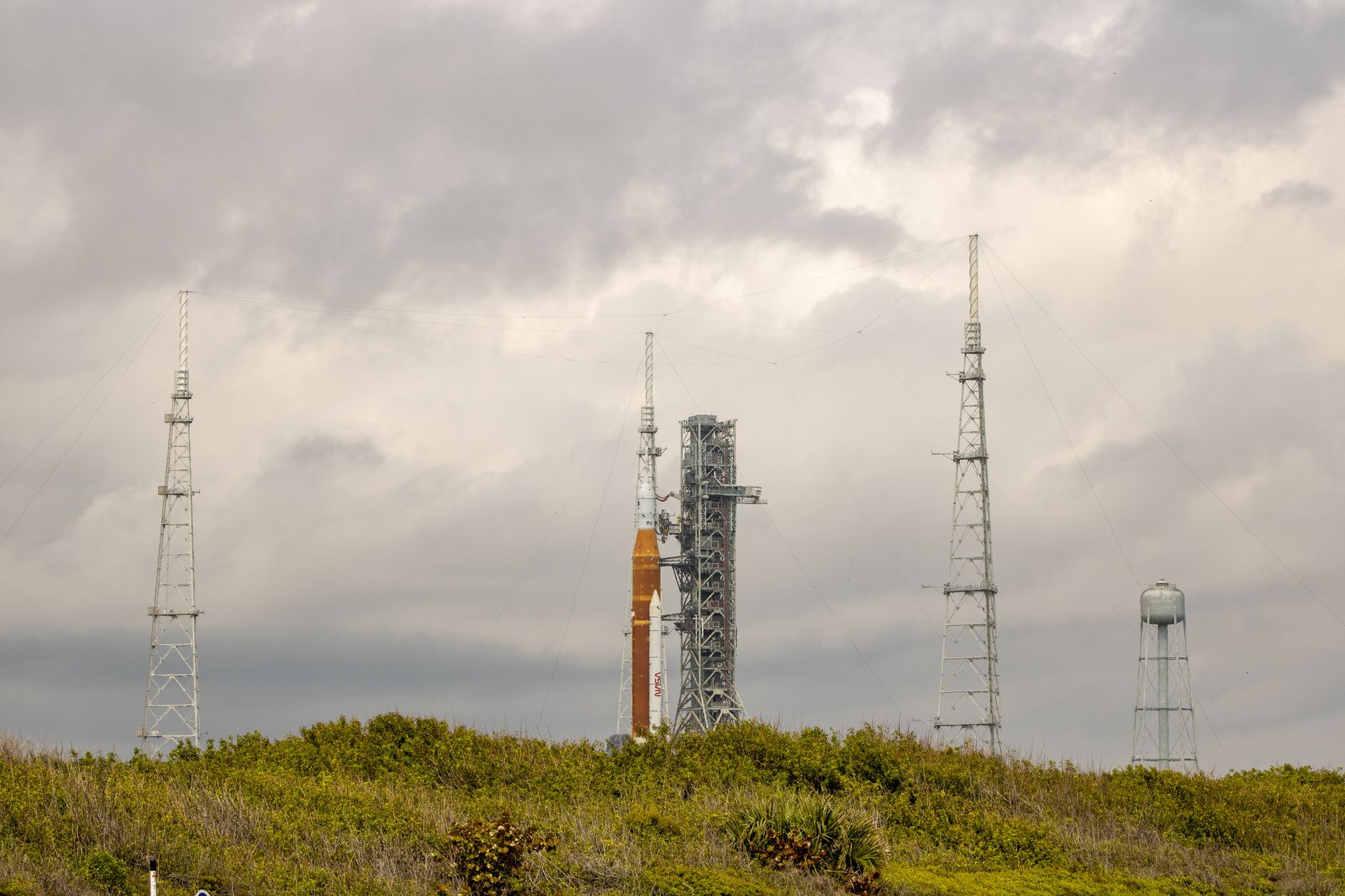
NASA’s Artemis IV mission is a significant step forward in the agency’s plans to return humans to the moon by 2025. The mission involves the development of a powerful rocket, the Space Launch System (SLS), which will be powered by a combination of liquid hydrogen and liquid oxygen. Recently, crews at NASA’s Michoud Assembly Facility in New Orleans transported the 130-foot-tall Artemis IV liquid hydrogen tank out of a production cell and into a detached test building.
This move marks a crucial milestone in the development of the SLS rocket, which will provide the necessary propulsion for the Artemis IV mission. The liquid hydrogen tank will form part of the core stage for the SLS rocket, providing thousands of gallons of super-cold propellant to one of four RS-25 engines.
Artemis IV Mission Overview
The Artemis IV mission is part of a broader effort by NASA to establish a sustainable presence on the lunar surface. The mission will involve the deployment of a lunar-orbiting space station, known as the Gateway, which will serve as a base for scientific research and exploration. The Artemis IV spacecraft will also carry a crew of astronauts to the lunar surface, where they will conduct scientific experiments and test the technologies needed for a manned mission to Mars.
The development of the SLS rocket is a critical component of the Artemis program. The rocket will be capable of carrying heavy payloads, including the Orion spacecraft, which will carry the astronauts to the lunar surface. The SLS rocket will also be powered by a combination of liquid hydrogen and liquid oxygen, which will provide the necessary propulsion for the mission.
Key Components of the SLS Rocket
The SLS rocket is a complex system that consists of several key components, including the core stage, the solid rocket boosters, and the upper stage. The core stage is the main component of the rocket, and it will provide the necessary propulsion for the mission. The solid rocket boosters will provide additional thrust during the initial stages of the launch, while the upper stage will be used to propel the spacecraft into lunar orbit.
- Liquid hydrogen tank: provides thousands of gallons of super-cold propellant to one of four RS-25 engines
- Solid rocket boosters: provide additional thrust during the initial stages of the launch
- Upper stage: used to propel the spacecraft into lunar orbit
The development of the SLS rocket is a significant challenge, and it requires the collaboration of several different teams and organizations. NASA is working closely with its partners in the private sector to develop the necessary technologies and components for the mission.
Challenges and Opportunities
The Artemis IV mission is a complex and challenging endeavor, and it poses several significant risks and opportunities. One of the main challenges is the development of the necessary technologies and components, including the SLS rocket and the Orion spacecraft. The mission also poses significant risks, including the risk of launch failure and the risk of astronaut injury or death.
Despite these challenges, the Artemis IV mission also poses several significant opportunities. The mission will provide a unique opportunity for scientific research and exploration, and it will help to establish the United States as a leader in space exploration. The mission will also provide a significant boost to the economy, as it will create new jobs and stimulate economic growth.
Conclusion
In conclusion, the Artemis IV mission is a significant step forward in NASA’s plans to return humans to the moon by 2025. The mission involves the development of a powerful rocket, the SLS, which will be powered by a combination of liquid hydrogen and liquid oxygen. The recent transport of the Artemis IV liquid hydrogen tank is a crucial milestone in the development of the SLS rocket, and it marks a significant step forward in the mission.
Source: nasa.gov.





Be First to Comment