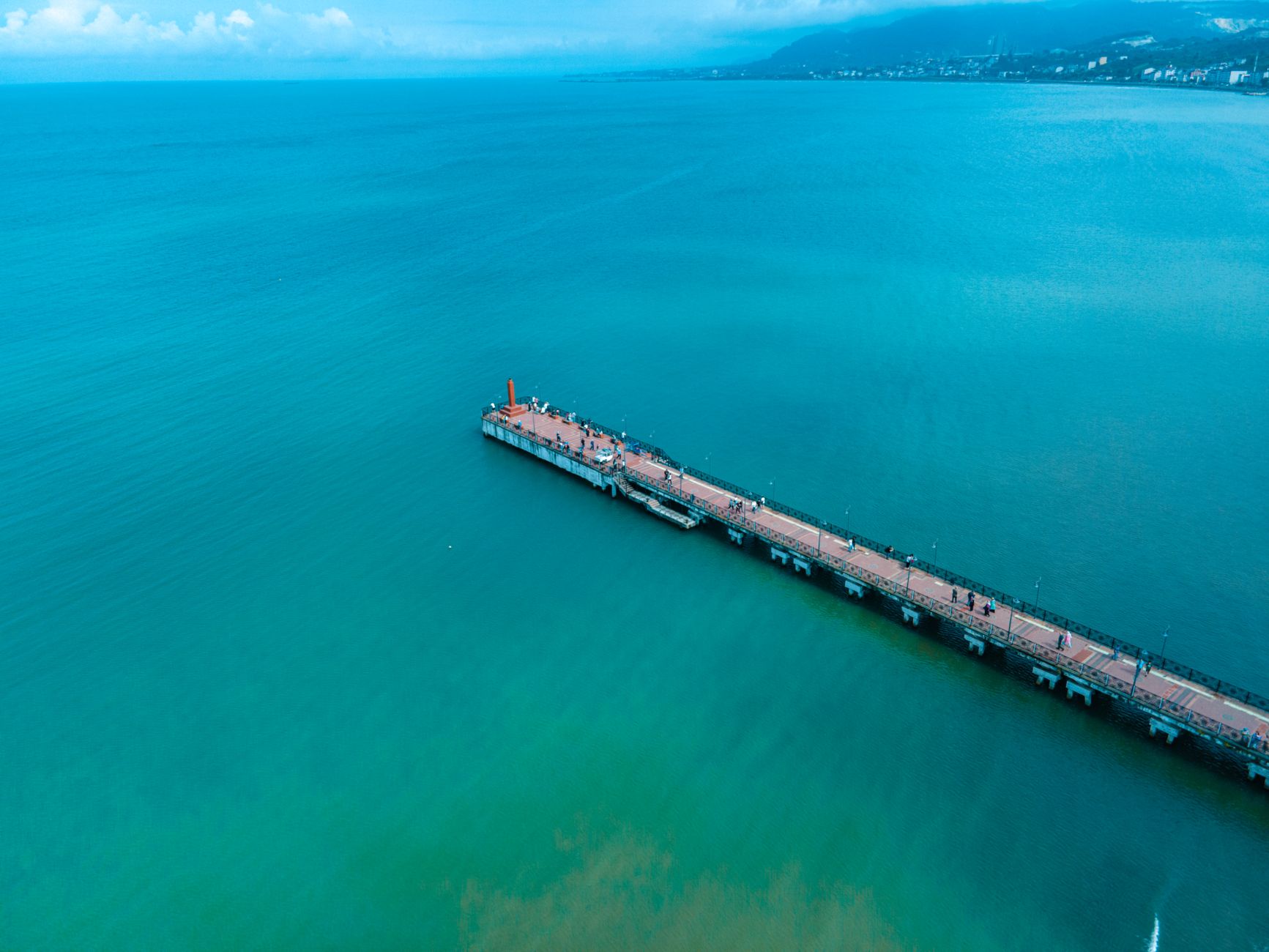
The black sea, situated at the boundary between Europe and Asia, is known for its dark surface waters. However, each spring and summer, it undergoes a striking transformation, turning into a swirling turquoise expanse. This phenomenon is likely caused by the presence of coccolithophores, a type of phytoplankton covered with calcium carbonate plates that give the surface waters a milky-blue appearance.
NASA’s PACE satellite, equipped with the Ocean Color Instrument, captured this transformation on June 22, 2026. The image reveals the black sea’s surface waters taking on a vibrant turquoise hue, a result of the coccolithophores blooms. These blooms tend to dominate in late spring and early summer, while diatoms, a type of microscopic algae with silica shells, become more prevalent during other times of the year, darkening the water rather than brightening it.
Understanding Coccolithophores and Their Role in the Black Sea
Coccolithophores are microscopic phytoplankton that play a crucial role in the ocean’s carbon cycle. When they die, some of the carbon they’ve taken up sinks to the seafloor, where it can remain stored for long periods of time. This process contributes to the ocean’s ability to act as a carbon sink, mitigating the effects of climate change. The black sea’s unique location, connecting Europe and Asia, makes it an important region for studying these blooms and their impact on the environment.
The Bosphorus, a narrow strait running through Istanbul, also experienced a turquoise tint, as captured by an astronaut aboard the International Space Station on May 27, 2026. This image shows the blooming phytoplankton tracing currents on both sides of the waterway, demonstrating the widespread nature of these blooms.
Remote Sensing and Its Applications in Studying the Black Sea
Remote sensing has become a valuable tool for researchers studying bloom dynamics in regions like the black sea, where direct sampling is limited. By analyzing satellite images, scientists can gain insights into the distribution and abundance of phytoplankton, as well as the factors driving these blooms. This information can be used to better understand the ocean’s carbon cycle and the impact of climate change on these ecosystems.
- Coccolithophores blooms contribute to the ocean’s carbon cycle
- Remote sensing helps researchers study bloom dynamics in the black sea
- The black sea’s unique location makes it an important region for studying phytoplankton blooms
Implications and Future Research Directions
The study of coccolithophores blooms in the black sea has significant implications for our understanding of the ocean’s carbon cycle and the impact of climate change on these ecosystems. Further research is needed to fully understand the drivers of these blooms and their role in the global carbon budget. As scientists continue to monitor the black sea and other regions, they may uncover new insights into the complex relationships between phytoplankton, the ocean, and the atmosphere.
Conclusion and Future Outlook
In conclusion, the black sea’s transformation into a turquoise expanse is a striking phenomenon driven by coccolithophores blooms. As researchers continue to study these blooms and their impact on the environment, they may uncover new insights into the complex relationships between phytoplankton, the ocean, and the atmosphere. The use of remote sensing and other technologies will be crucial in advancing our understanding of these ecosystems and the role they play in mitigating the effects of climate change.
Source: science.nasa.gov.






Be First to Comment