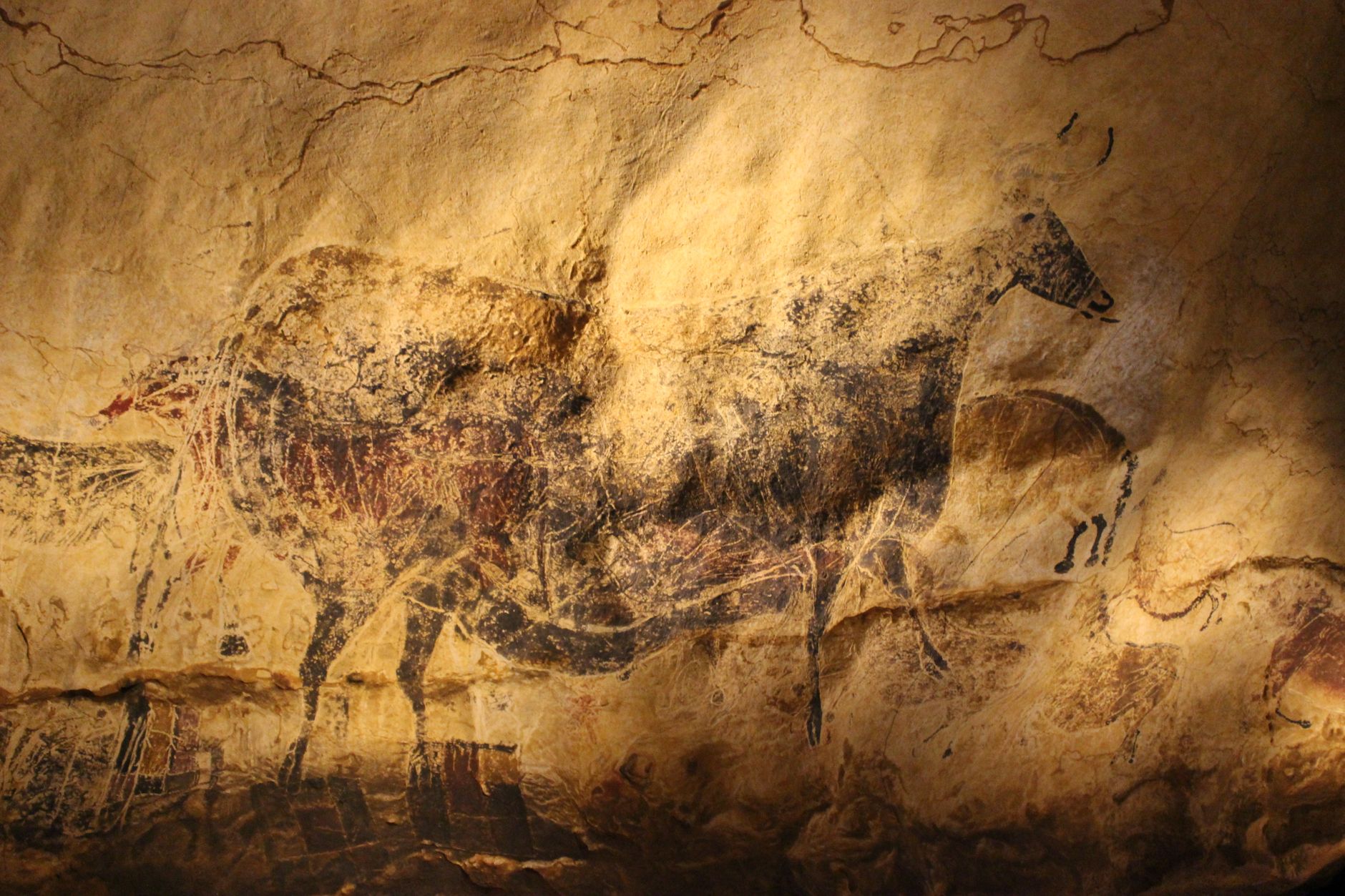
Recent discoveries have shed new light on the age of ancient cave paintings found in France’s Font-de-Gaume cave. The cave paintings have been a subject of interest for many years, but their exact age was unknown until now. Scientists have made a groundbreaking discovery, finding charcoal inside black pigments once thought to contain only minerals, allowing them to use radiocarbon dating.
This new analysis has provided a precise date for the cave paintings, revealing that a bison was painted around 13,000 years ago. Furthermore, sections of a mask-like figure were added during several widely separated periods, giving us a glimpse into the lives of our ancient ancestors.
cave paintings and their significance
The discovery of the cave paintings and their precise dating has significant implications for our understanding of human history. It provides a unique window into the lives of our ancient ancestors, giving us insight into their culture, traditions, and way of life. The cave paintings are not only a testament to the artistic expression of our ancestors but also a reflection of their spiritual and religious beliefs.
The use of radiocarbon dating has allowed scientists to determine the exact age of the cave paintings, providing a level of accuracy that was previously unknown. This technique has opened up new avenues of research, enabling scientists to study the cave paintings in greater detail and gain a deeper understanding of their significance.
the discovery process
The discovery of the charcoal inside the black pigments was a significant breakthrough in the analysis of the cave paintings. Scientists used a combination of techniques, including radiocarbon dating and microscopic analysis, to determine the composition of the pigments and the age of the cave paintings.
The process of dating the cave paintings was complex and required careful analysis of the samples. The scientists had to extract the charcoal from the pigments and then subject it to radiocarbon dating. The results of the dating process provided a precise age for the cave paintings, revealing that they were created over 13,000 years ago.
implications and future research
The discovery of the cave paintings and their precise dating has significant implications for our understanding of human history. It provides a unique window into the lives of our ancient ancestors, giving us insight into their culture, traditions, and way of life. The cave paintings are not only a testament to the artistic expression of our ancestors but also a reflection of their spiritual and religious beliefs.
Some of the key implications of the discovery include:
- Providing a precise date for the cave paintings, allowing scientists to study them in greater detail
- Offering a unique window into the lives of our ancient ancestors, giving us insight into their culture and traditions
- Reflecting the spiritual and religious beliefs of our ancestors, providing a deeper understanding of their way of life
conclusion and future directions
In conclusion, the discovery of the cave paintings and their precise dating has significant implications for our understanding of human history. The use of radiocarbon dating has allowed scientists to determine the exact age of the cave paintings, providing a level of accuracy that was previously unknown. As scientists continue to study the cave paintings, we can expect to gain a deeper understanding of our ancient ancestors and their way of life.
Source: sciencedaily.com.






Be First to Comment