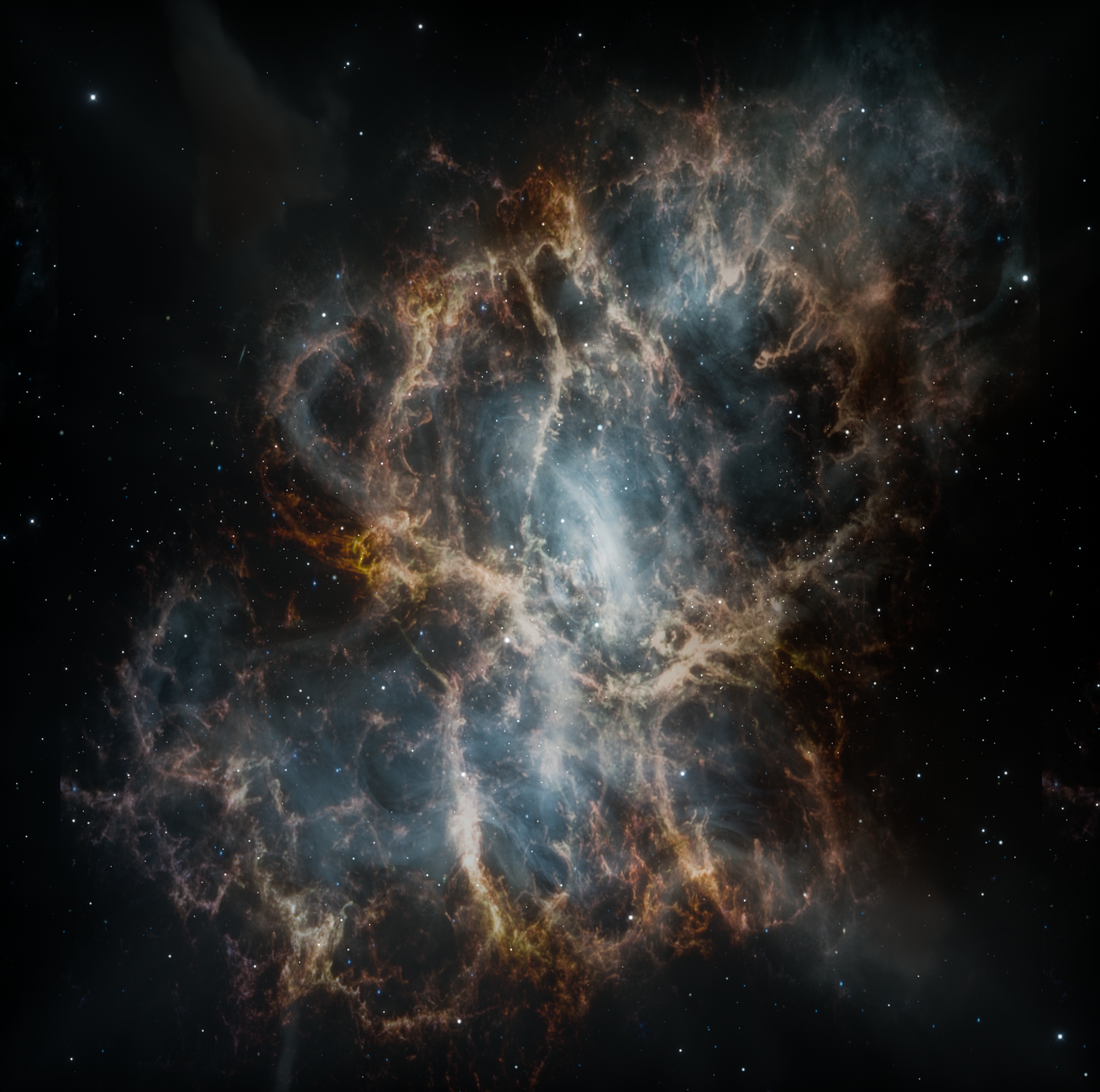
The Hubble Space Telescope has been a cornerstone of space exploration for over three decades, capturing breathtaking images of the universe and revealing secrets of the cosmos. The hubble space telescope has been instrumental in our understanding of the universe, from the formation of stars to the expansion of the cosmos. Recently, the Hubble Space Telescope captured a stunning image of a crimson cloud sparkling with white and blue stars in the LH 95 region of the Large Magellanic Cloud.
This image is not only a testament to the telescope’s incredible capabilities but also provides valuable insights into the formation of stars. The LH 95 region is a stellar nursery, where young stars are born from collapsing clouds of gas and dust. The most massive stars in this region are visible as bright blue stars, which expel ultraviolet radiation and stellar winds that heat and shape the surrounding hydrogen gas.
Understanding Star Formation with the Hubble Space Telescope
The Hubble Space Telescope has been studying the LH 95 region to gain a better understanding of star formation. By analyzing the image, researchers have identified over 2,500 stars that have accumulated almost all of their critical mass but have not yet begun fusion reactions. These pre-main-sequence stars are still gathering material from the disks of gas and dust around them and will soon begin burning hydrogen in their cores to become full stars.
The study of these forming stars has confirmed that the stars’ accretion rate decreases with age, as expected. However, the research also revealed that accretion can persist for several million years, longer than sometimes assumed. This information helps refine our understanding of how young stars keep growing and how their disks evolve.
The Importance of the Large Magellanic Cloud
The Large Magellanic Cloud is a dwarf galaxy that orbits the Milky Way and is an ideal location for studying star formation. The cloud’s proximity to the Milky Way and its relatively low dust content make it an ideal target for telescopes like the Hubble Space Telescope. The LH 95 region is one of many stellar associations in the Large Magellanic Cloud, where low-mass infant stars live alongside massive blue giant stars.
Key Findings from the Hubble Space Telescope
- The Hubble Space Telescope has captured a stunning image of a crimson cloud sparkling with white and blue stars in the LH 95 region of the Large Magellanic Cloud.
- The LH 95 region is a stellar nursery, where young stars are born from collapsing clouds of gas and dust.
- The most massive stars in this region are visible as bright blue stars, which expel ultraviolet radiation and stellar winds that heat and shape the surrounding hydrogen gas.
- Researchers have identified over 2,500 stars that have accumulated almost all of their critical mass but have not yet begun fusion reactions.
- The study of these forming stars has confirmed that the stars’ accretion rate decreases with age, as expected.
Conclusion and Future Research Directions
The Hubble Space Telescope has been a vital tool in our understanding of the universe, and its continued operation has provided valuable insights into the formation of stars. The study of the LH 95 region has revealed new information about the formation of stars and the evolution of the universe. As the Hubble Space Telescope continues to capture stunning images of the cosmos, it is likely that new discoveries will be made, further expanding our understanding of the universe and its many mysteries.
Source: science.nasa.gov.






Be First to Comment