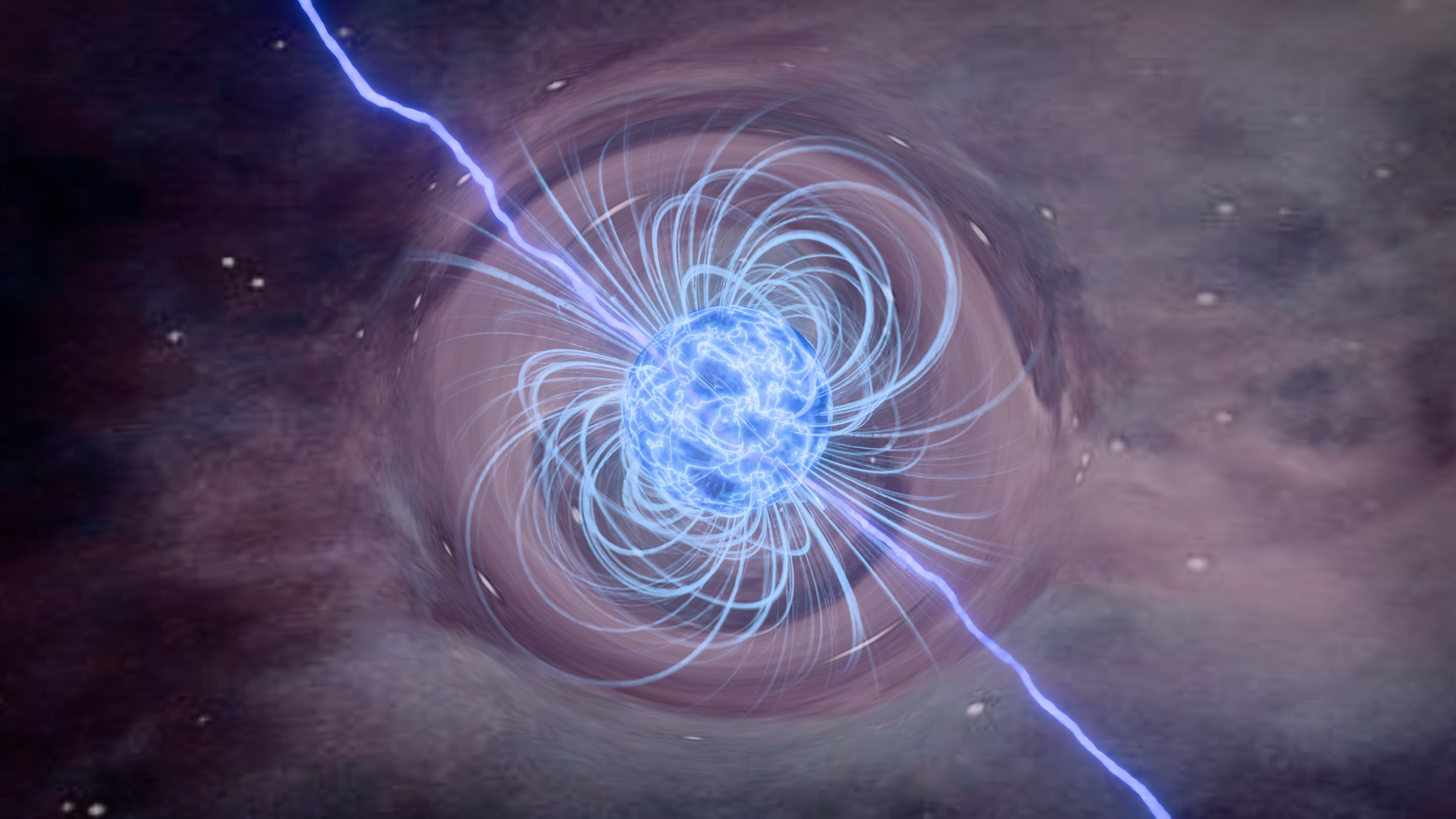
NASA’s Imaging X-ray Polarimetry Explorer (IXPE) has been studying the magnetar 1E 1547-5408, a neutron star with an ultra-strong magnetic field. The magnetar studies, which lasted over 140 hours, may have captured empty space behaving in a way physicists have predicted for 90 years but never directly observed. Magnetars are a special class of neutron stars with the strongest magnetic fields in the observable universe.
The study of magnetars is crucial in understanding the behavior of matter in extreme conditions. The magnetic fields of magnetars are around a trillion times stronger than the strongest permanent magnets ever built on Earth. This extreme environment allows scientists to test theories and predictions that are not possible to replicate in a laboratory setting.
magnetar studies and their significance
The IXPE’s observation of the magnetar 1E 1547-5408 is a significant milestone in the field of astrophysics. The data collected during the 140 hours of observation will help scientists better understand the behavior of magnetars and their role in the universe. The study of magnetars can also provide insights into the behavior of other extreme objects, such as black holes and pulsars.
The observation of magnetars is a complex task that requires sophisticated instruments and techniques. The IXPE is equipped with state-of-the-art technology that allows it to detect and analyze the X-ray radiation emitted by magnetars. The data collected by the IXPE will be analyzed by scientists using advanced computational models and techniques.
the science behind magnetar studies
Magnetars are formed when a massive star undergoes a supernova explosion. The core of the star collapses into a neutron star, which is an incredibly dense object with a strong magnetic field. The magnetic field of a magnetar is so strong that it can affect the surrounding space, causing the emission of X-ray radiation.
The study of magnetars involves the analysis of this X-ray radiation, which can provide insights into the internal structure and behavior of the magnetar. Scientists use computational models to simulate the behavior of magnetars and predict their properties. The comparison of these predictions with observational data allows scientists to refine their understanding of magnetars and their role in the universe.
applications of magnetar studies
- Advancements in our understanding of extreme astrophysical phenomena
- Insights into the behavior of matter in extreme conditions
- Potential applications in the development of new technologies, such as advanced materials and propulsion systems
The study of magnetars has the potential to drive significant advancements in our understanding of the universe. The insights gained from magnetar studies can be applied to a wide range of fields, from astrophysics to materials science. As scientists continue to explore and study magnetars, we can expect to uncover new and exciting discoveries that will challenge our current understanding of the universe.
future directions for magnetar studies
The future of magnetar studies is exciting and full of possibilities. With the continued development of new technologies and instruments, scientists will be able to study magnetars in greater detail than ever before. The analysis of data from the IXPE and other missions will provide a wealth of new information about magnetars and their role in the universe. As we look to the future, we can expect to see significant advancements in our understanding of magnetars and their place in the universe.
Source: nasa.gov.






Be First to Comment