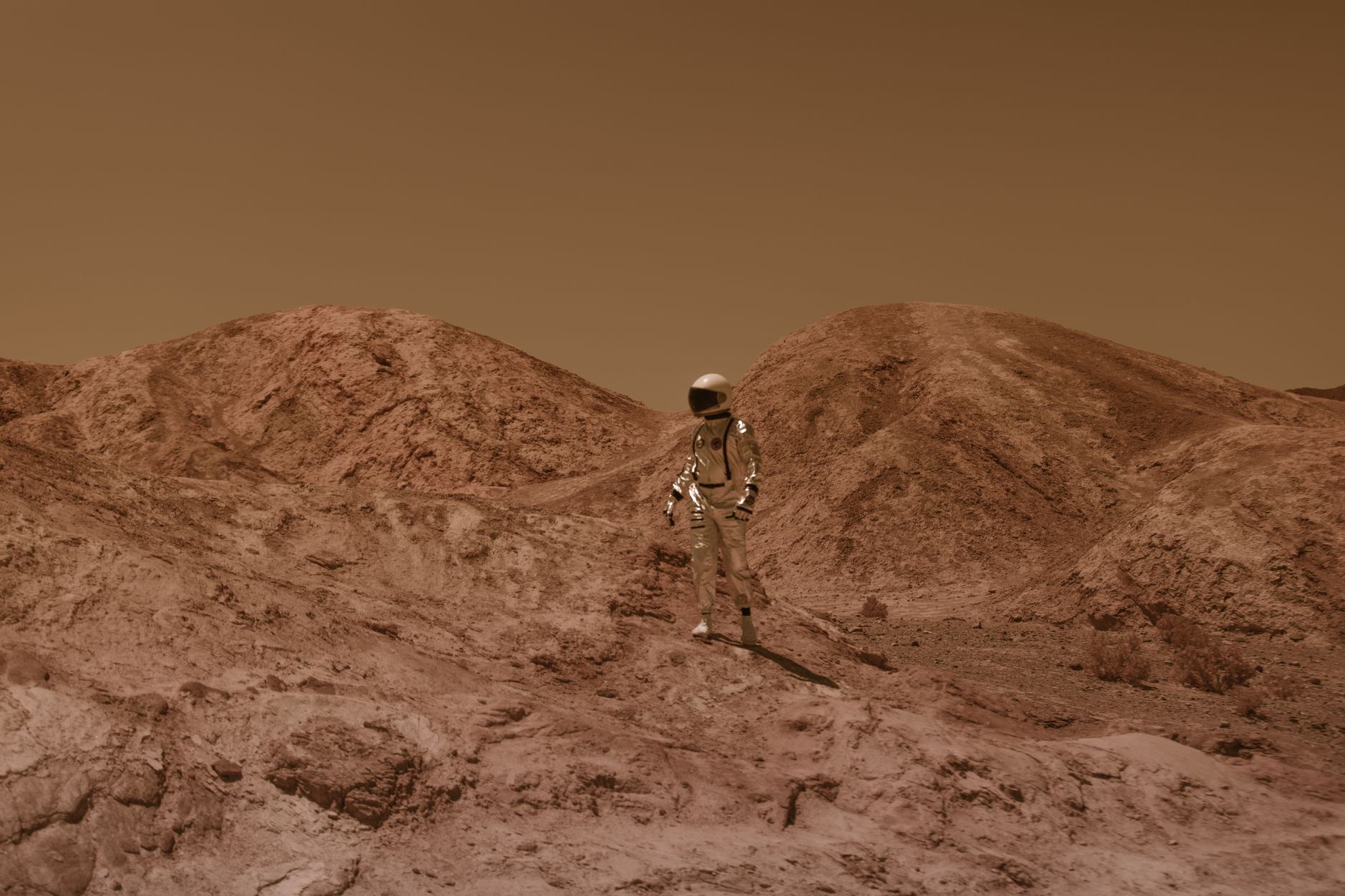
NASA’s Mars Perseverance rover has made a remarkable observation of the Earth disappearing behind the Martian moon Phobos. The Mars perseverance rover, which has been exploring the red planet since 2021, captured a series of images of the Earth passing behind Phobos, providing a unique perspective on the orbital patterns of the Martian moons.
The images, taken by the rover’s Mastcam-Z instrument, show the Earth as a small, bright dot moving across the Martian sky, while Phobos appears as a larger, crescent-shaped object. The observation is a rare occurrence, as the Earth and Phobos must be aligned in a specific way for the occultation to take place.
Mars Perseverance and the Martian Moons
The Martian moons, Phobos and Deimos, are small, irregularly shaped objects that orbit the planet at close range. Phobos, the larger of the two moons, is about 17 miles across and orbits Mars at a distance of approximately 4,850 miles. Deimos, on the other hand, is about 7.5 miles across and orbits Mars at a distance of approximately 12,470 miles.
The Mars perseverance rover has been studying the Martian moons and their orbital patterns, providing valuable insights into the formation and evolution of the Martian system. The rover’s observations have also shed light on the geological history of Mars, including the formation of the planet’s valleys, craters, and volcanoes.
Occultations and Transits
Occultations, such as the one observed by the Mars perseverance rover, occur when a larger object passes in front of a smaller one, blocking its light. Transits, on the other hand, occur when a smaller object passes in front of a larger one, appearing as a small, dark silhouette. The Mars perseverance rover has also observed transits of Phobos and Deimos across the Sun, providing valuable information about the Martian moons’ orbits and sizes.
- Phobos orbits Mars three times a day
- Deimos orbits Mars once every 30 hours
- The Martian moons are thought to be captured asteroids
- The Mars perseverance rover has been exploring Mars since 2021
- The rover’s Mastcam-Z instrument is capable of capturing high-resolution images of the Martian surface and sky
Implications and Future Research
The observation of the Earth disappearing behind Phobos has significant implications for our understanding of the Martian system and its orbital patterns. The Mars perseverance rover’s findings will contribute to a better understanding of the formation and evolution of the Martian moons and their role in the planet’s geological history.
Future research will focus on continued exploration of the Martian surface and sky, including the study of the planet’s valleys, craters, and volcanoes. The Mars perseverance rover will continue to provide valuable insights into the Martian system, shedding light on the planet’s mysteries and advancing our understanding of the red planet.
Conclusion
The Mars perseverance rover’s observation of the Earth disappearing behind Phobos is a remarkable achievement, providing a unique perspective on the Martian moons and their orbital patterns. The rover’s findings will contribute to a better understanding of the Martian system, advancing our knowledge of the red planet and its place in the solar system.
Source: nasa.gov.






Be First to Comment