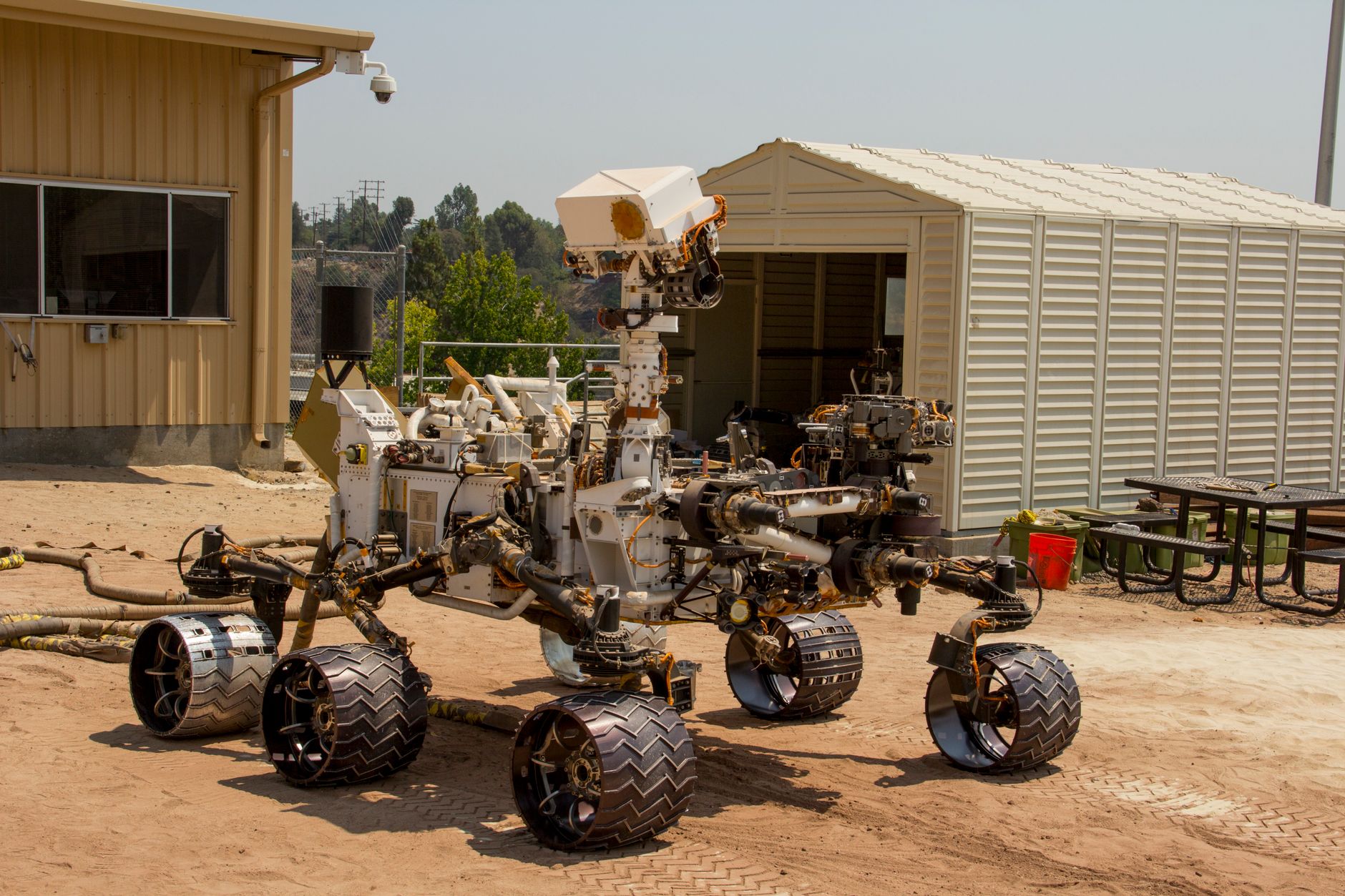
NASA’s Curiosity rover is shifting gears as it moves away from its recent boxwork campaign and towards a new destination, the Yardang unit. This series of pale-colored, wind-sculpted hills is visible in the distance, and the rover is making its way there with a mix of long drives and shorter stops to investigate interesting rock formations.
From Campaign Mode to Exploration Mode
The Curiosity rover has two main modes of operation: a focused campaign mode and a more free-form exploration mode. During a campaign, every move is carefully choreographed to ensure that all scientific goals are met. In contrast, the exploration mode is more relaxed, with the rover driving towards its next major destination and stopping to investigate interesting features along the way.
This change in pace is a welcome shift for the rover’s team, who have been working intensively on the recent boxwork campaign. As a geologist, the opportunity to explore and discover new things is exciting, and the Yardang unit is a promising destination.
The Journey to Yardang Unit
The rover is currently driving over laminated bedrock, which varies in color and texture. The rocks are a mix of pale-colored and darker, flaky layers, and some of them are angled in unusual ways, making it challenging to plan the rover’s route. The team is using a combination of instruments, including the Alpha Particle X-Ray Spectrometer (APXS) and the Chemistry and Camera (ChemCam) instrument, to analyze the rocks and gain a better understanding of the area’s geology.
One of the interesting features of the Yardang unit is the contrast between the pale-colored and darker rocks. The team is eager to learn more about this contrast and what it might reveal about the area’s history. The rover is also taking advantage of the wide-open landscape to capture images of features from different angles and distances.
Environmental Monitoring and Future Plans
In addition to its geological investigations, the rover is also conducting environmental monitoring activities. These include dust devil monitoring and measurements of dust levels in the atmosphere. The team is also planning the rover’s route and activities for the coming weeks, including a weekend drive that will take the rover further into the Yardang unit.
The future plans for the Curiosity rover are exciting, and the team is eager to see what discoveries the Yardang unit holds. With its unique combination of instruments and capabilities, the rover is well-equipped to explore this fascinating region of Mars and gain a deeper understanding of the planet’s history and geology.
What’s Next for the Curiosity Rover?
As the Curiosity rover continues its journey to the Yardang unit, the team is busy analyzing data and planning the rover’s next moves. The rover’s instruments are providing a wealth of information about the area’s geology and environment, and the team is using this data to refine their understanding of the region. With its proven track record of discovery and exploration, the Curiosity rover is poised to make new and exciting discoveries in the weeks and months ahead.
- The Curiosity rover is a robotic explorer that has been operating on Mars since 2012.
- The rover is equipped with a range of instruments, including cameras, spectrometers, and a rock-analyzing laser.
- The Yardang unit is a series of wind-sculpted hills on Mars, characterized by pale-colored rocks and unusual geological features.
The Curiosity rover’s journey to the Yardang unit is just the latest chapter in its ongoing mission to explore Mars and gain a deeper understanding of the planet’s history and geology. With its unique combination of instruments and capabilities, the rover is well-equipped to make new and exciting discoveries, and the team is eager to see what the future holds.
The exploration of Mars is a complex and ongoing process, and the Curiosity rover is just one part of a larger effort to understand the planet and its place in the universe. As the rover continues its journey, it is sure to provide new and valuable insights into the geology and environment of Mars, and to help scientists better understand the planet’s history and potential for life.
For now, the Curiosity rover is focused on its journey to the Yardang unit, and the team is busy analyzing data and planning the rover’s next moves. With its proven track record of discovery and exploration, the rover is poised to make new and exciting discoveries in the weeks and months ahead, and to continue its important work in advancing our understanding of Mars and the universe.
The Yardang unit is a fascinating region of Mars, with its unique combination of geological features and wind-sculpted hills. The Curiosity rover’s exploration of this region is sure to provide new and valuable insights into the planet’s history and geology, and to help scientists better understand the potential for life on Mars.
As the Curiosity rover continues its journey, it is sure to encounter new and exciting challenges, and to make new and important discoveries. The team is eager to see what the future holds, and to continue their important work in exploring Mars and advancing our understanding of the universe.
The exploration of Mars is a complex and ongoing process, and the Curiosity rover is just one part of a larger effort to understand the planet and its place in the universe. With its unique combination of instruments and capabilities, the rover is well-equipped to make new and exciting discoveries, and to help scientists better understand the planet’s history and potential for life.
Source: science.nasa.gov.






Be First to Comment