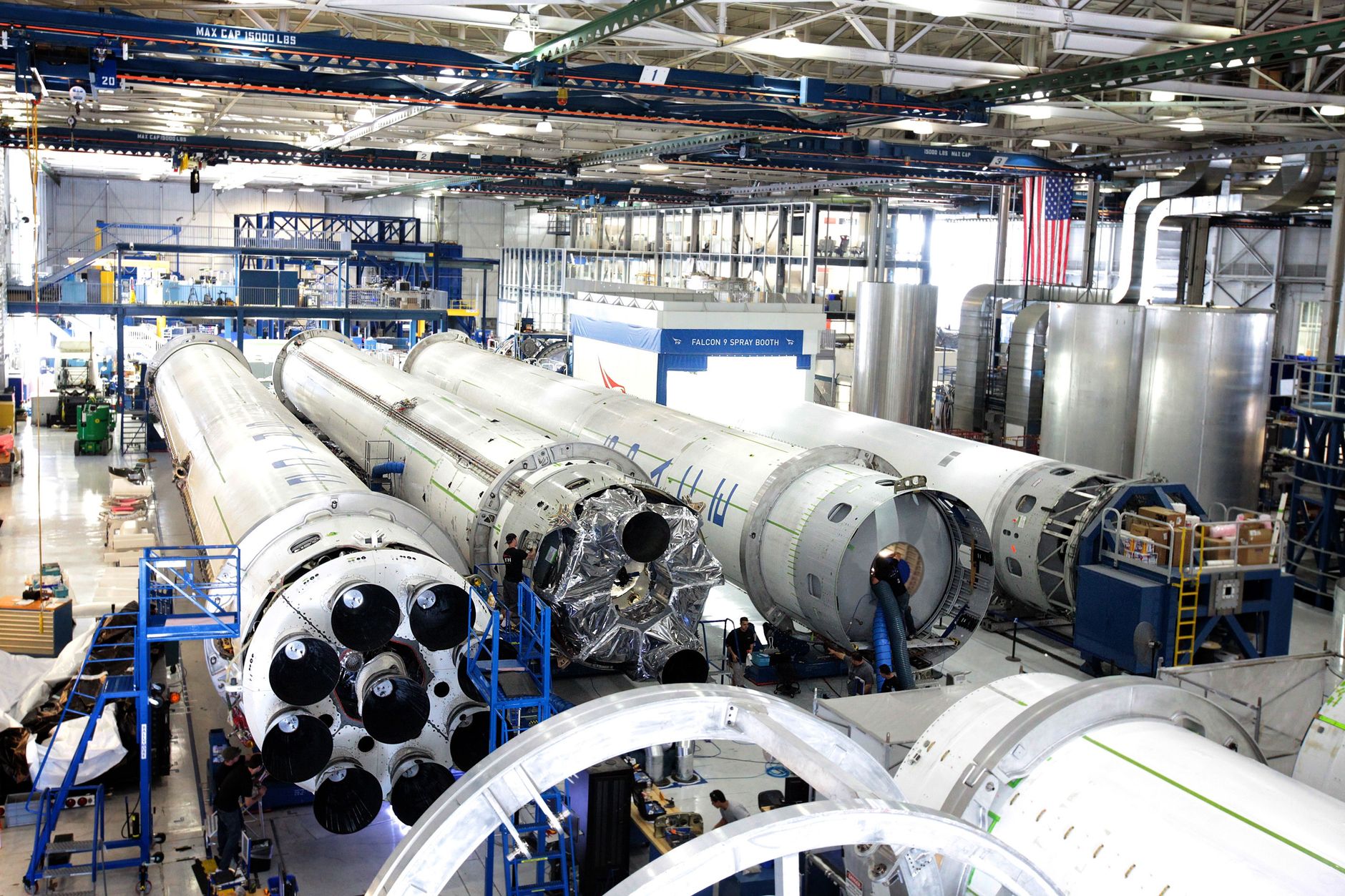
NASA has announced an agreement with Blue Origin to use the B-2 test stand at the agency’s Stennis Space Center for engine testing, advancing rocket development for future missions to the Moon under the Artemis program. The New Glenn Rocket, named in honor of the late NASA astronaut John Glenn, will undergo second stage hot fire testing on the B-2 test stand. This partnership highlights NASA’s commitment to working alongside commercial partners toward Artemis missions in 2027 and beyond.
The B-2 test stand, featuring dual, vertical firing positions built in the 1960s, has a rich history of testing rocket stages for Moon missions, including the Saturn V rocket stages that carried humans to the Moon during the Apollo Program. More recently, NASA conducted a Green Run test series of the SLS core stage on the stand before the Artemis I test flight.
New Glenn Rocket Development
The New Glenn Rocket’s second stage is powered by two BE-3 engines that use liquid oxygen and liquid hydrogen propellants, with each engine generating 200,000 pounds of thrust in vacuum. Blue Origin will work toward second stage rocket testing on the B-2 test stand, with NASA providing hands-on technical support, dedicated workspace, and sharing agency expertise and lessons learned from propulsion testing conducted at the test stand.
Testing, targeted to begin this fall, directly supports NASA’s work to achieve the national goal of landing American astronauts on the surface of the Moon and building a Moon Base near the lunar South Pole. These efforts aim to strengthen American leadership in space, unlock scientific discovery, drive innovation with industry, and prepare for human missions to Mars.
Artemis Program Overview
The Artemis program is a highly choreographed, multi-launch campaign that will require four astronauts to test rendezvous and docking capabilities of NASA’s Orion spacecraft with commercial human landing systems from Blue Origin and SpaceX in low Earth orbit. In addition, Blue Origin’s New Glenn will be used to launch missions that will land on the Moon.
- Artemis II: The first mission to send astronauts to the Moon since the Apollo era
- Artemis III: A mission to establish a sustained lunar presence and prepare for human missions to Mars
- Artemis IV and V: Missions to land astronauts on the Moon and demonstrate capabilities for future lunar missions
The success of the Artemis program relies on partnerships like the one between NASA and Blue Origin, which will help advance the next generation of rocket propulsion and support high-skilled jobs and strengthening the nation’s leadership in space exploration.
Implications and Questions to Watch
As the New Glenn Rocket testing progresses, several questions remain, including the timeline for the Artemis missions, the role of commercial partners in the program, and the potential risks and challenges associated with establishing a sustained lunar presence. The partnership between NASA and Blue Origin is a significant step forward for the Artemis program, and its success will have important implications for the future of space exploration.
Conclusion
In conclusion, the New Glenn Rocket testing is a critical component of the Artemis program, and the partnership between NASA and Blue Origin is a significant step forward for the program. As the testing progresses, it will be important to watch for updates on the timeline, the role of commercial partners, and the potential risks and challenges associated with establishing a sustained lunar presence.
Source: nasa.gov.






Be First to Comment