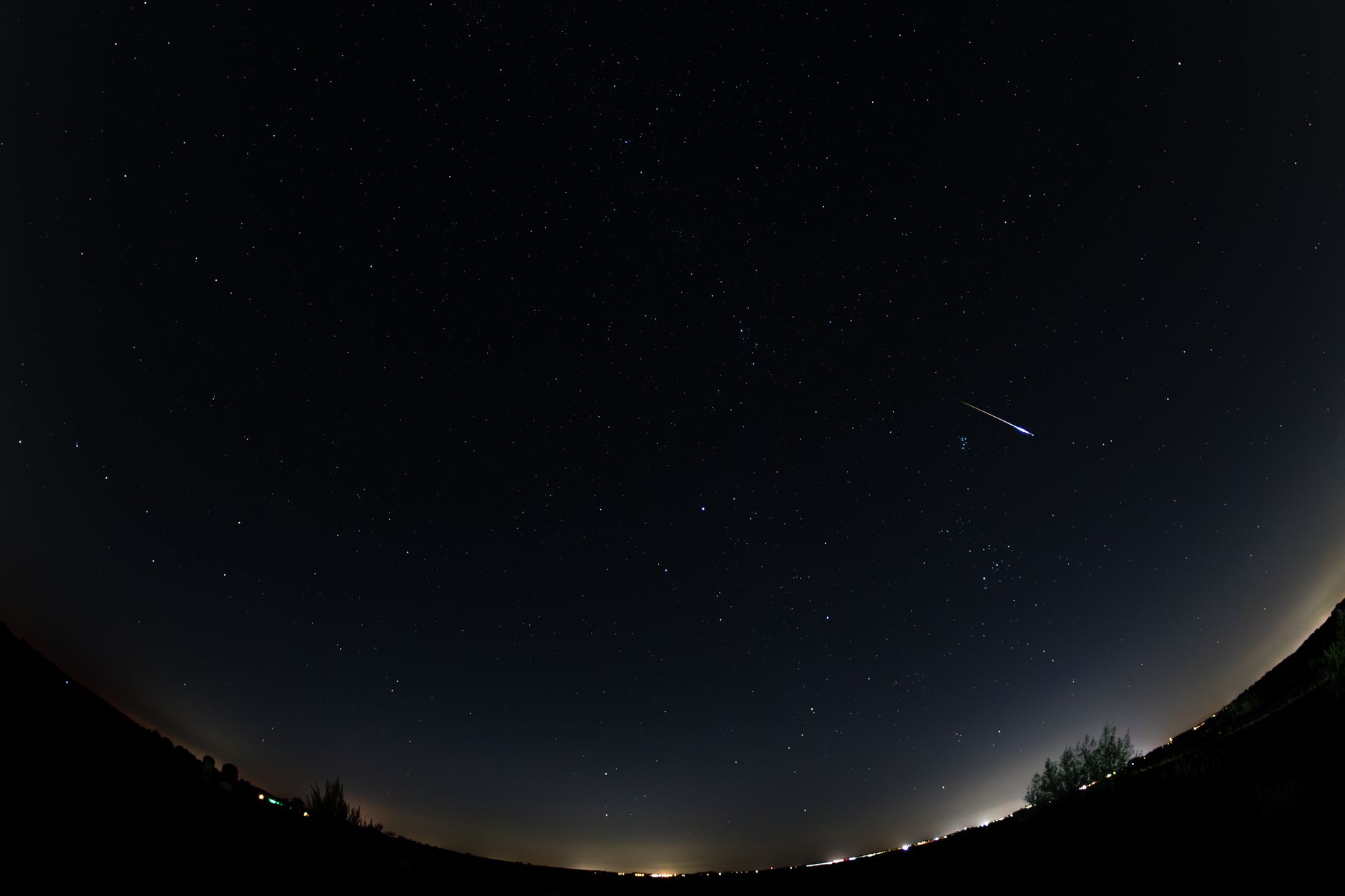
The perseid meteor shower is a highlight of the astronomical calendar, known for its bright and fast meteors that streak across the night sky. The annual event is created as grains of dust cast off along the orbit of periodic comet 109P/Swift-Tuttle vaporize in Earth’s dense atmosphere. This year, the shower’s peak activity coincided with a New Moon, so perseid meteor flashes were undiminished by bright moonlight.
The perseid meteor shower is one of the most popular and spectacular, with up to 50 meteors per hour at its peak. The meteors appear to originate from a radiant in the constellation Perseus, which is where the shower gets its name. The perseid meteor shower is a great opportunity for skywatchers to see some of the brightest and most beautiful meteors of the year.
What are Perseid Meteors?
Perseid meteors are small particles of debris that are left behind by the comet 109P/Swift-Tuttle as it orbits the Sun. When the Earth passes through this debris, the particles enter the atmosphere and burn up, producing the bright streaks of light that we see as meteors. The perseid meteor shower is one of the most reliable and predictable, with the peak activity usually occurring in mid-August.
The perseid meteor shower is not just a beautiful spectacle, but also an important area of research for astronomers. By studying the meteors and their orbits, scientists can learn more about the composition and structure of comets and the early solar system. The perseid meteor shower is also a great opportunity for astronomers to study the effects of meteoroids on the Earth’s atmosphere.
Observing the Perseid Meteor Shower
Observing the perseid meteor shower is relatively easy, and can be done with the naked eye. The best time to see the meteors is usually between midnight and dawn, when the Earth is facing the direction of the meteor shower. It’s also a good idea to find a dark location with minimal light pollution, as this will allow you to see more meteors.
- Find a dark location with minimal light pollution
- Dress warmly and bring a blanket or chair to make yourself comfortable
- Give your eyes time to adjust to the dark, it can take up to 20 minutes
- Look for the constellation Perseus, which is where the meteors will appear to originate
- Be patient, it can take some time to see a meteor
The perseid meteor shower is a great opportunity for skywatchers to see some of the brightest and most beautiful meteors of the year. With its peak activity usually occurring in mid-August, it’s a great time to get outside and enjoy the night sky.
Conclusion
In conclusion, the perseid meteor shower is a celestial spectacle that is not to be missed. With its bright and fast meteors, it’s a great opportunity for skywatchers to see some of the most beautiful meteors of the year. Whether you’re a seasoned astronomer or just starting to explore the night sky, the perseid meteor shower is an event that is sure to leave you in awe.
Future of Perseid Meteor Shower
The perseid meteor shower is an annual event that will continue to occur for many years to come. As the comet 109P/Swift-Tuttle continues to orbit the Sun, it will leave behind a trail of debris that will produce the meteors that we see. The perseid meteor shower is a great opportunity for astronomers to study the composition and structure of comets and the early solar system, and it will continue to be an important area of research for many years to come.
Source: science.nasa.gov.





Be First to Comment