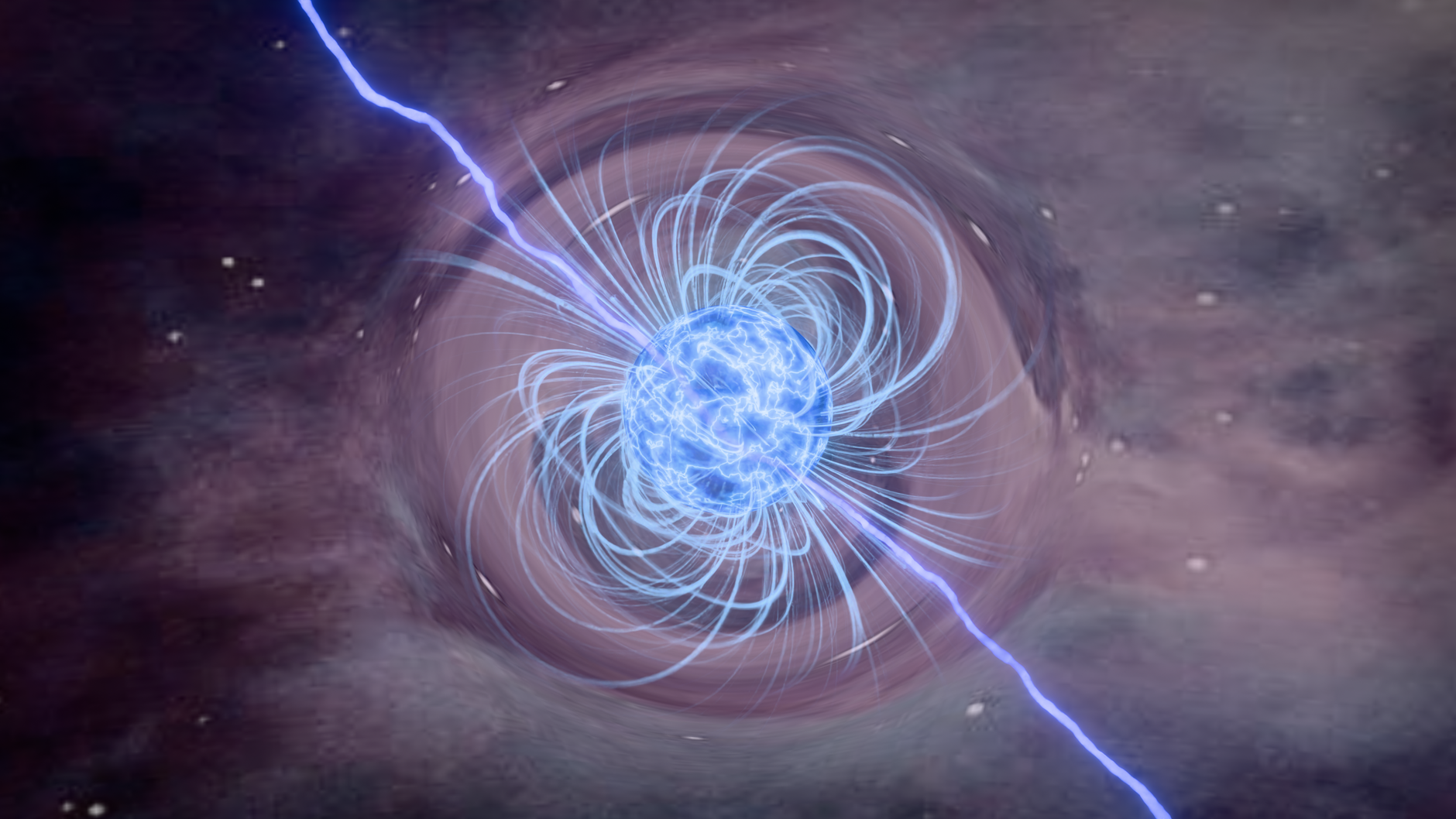
NASA’s pulsar study has made a significant breakthrough with the use of the Imaging X-ray Polarimetry Explorer (IXPE). The pulsar study focused on PSR J1101−6101, a pulsar located within the Lighthouse Nebula. This pulsar is a neutron star with a strong magnetic field that spins incredibly fast.
The IXPE was used to directly measure the magnetic fields of the pulsar for the first time. The results provide new insight into the structure of some of the most extreme objects in the cosmos. The study was conducted using a combination of X-ray data from NASA’s Chandra X-ray Observatory and the IXPE.
pulsar study with IXPE
The IXPE is a powerful tool for studying the universe’s most extreme objects. It allows scientists to directly measure the magnetic fields of these objects, providing valuable insights into their structure and behavior. The pulsar study is a prime example of the IXPE’s capabilities.
The Lighthouse Nebula is a complex region of space that is home to many interesting objects, including the pulsar PSR J1101−6101. The nebula is a vast cloud of gas and dust that is illuminated by the intense radiation emitted by the pulsar. The pulsar’s strong magnetic field and rapid spin make it an ideal target for study.
Understanding Pulsars
Pulsars are incredibly dense objects that are formed when a star undergoes a supernova explosion. They are made up of neutrons and have extremely strong magnetic fields. Pulsars spin rapidly, emitting beams of radiation that can be detected from great distances.
The study of pulsars is important for our understanding of the universe. Pulsars can be used to study the behavior of matter in extreme conditions, such as high densities and temperatures. They can also be used to test theories of gravity and the behavior of magnetic fields.
Methodology
The pulsar study used a combination of X-ray data from the Chandra X-ray Observatory and the IXPE. The Chandra X-ray Observatory provided high-resolution images of the pulsar and its surroundings, while the IXPE provided measurements of the pulsar’s magnetic field.
The data were analyzed using sophisticated software that allowed scientists to reconstruct the pulsar’s magnetic field. The results showed that the pulsar’s magnetic field is highly complex and has a unique structure.
Implications and Future Research
- The pulsar study has significant implications for our understanding of the universe’s most extreme objects.
- The use of the IXPE has opened up new possibilities for the study of pulsars and other objects.
- Future research will focus on using the IXPE to study other pulsars and objects, providing further insights into the universe.
The pulsar study is a significant breakthrough in our understanding of the universe. The use of the IXPE has provided new insights into the structure and behavior of pulsars, and has opened up new possibilities for future research.
Conclusion
In conclusion, the pulsar study is an important step forward in our understanding of the universe. The use of the IXPE has provided new insights into the structure and behavior of pulsars, and has significant implications for our understanding of the universe’s most extreme objects. As scientists continue to study pulsars and other objects, we can expect to learn more about the universe and its many mysteries.
Source: nasa.gov.






Be First to Comment