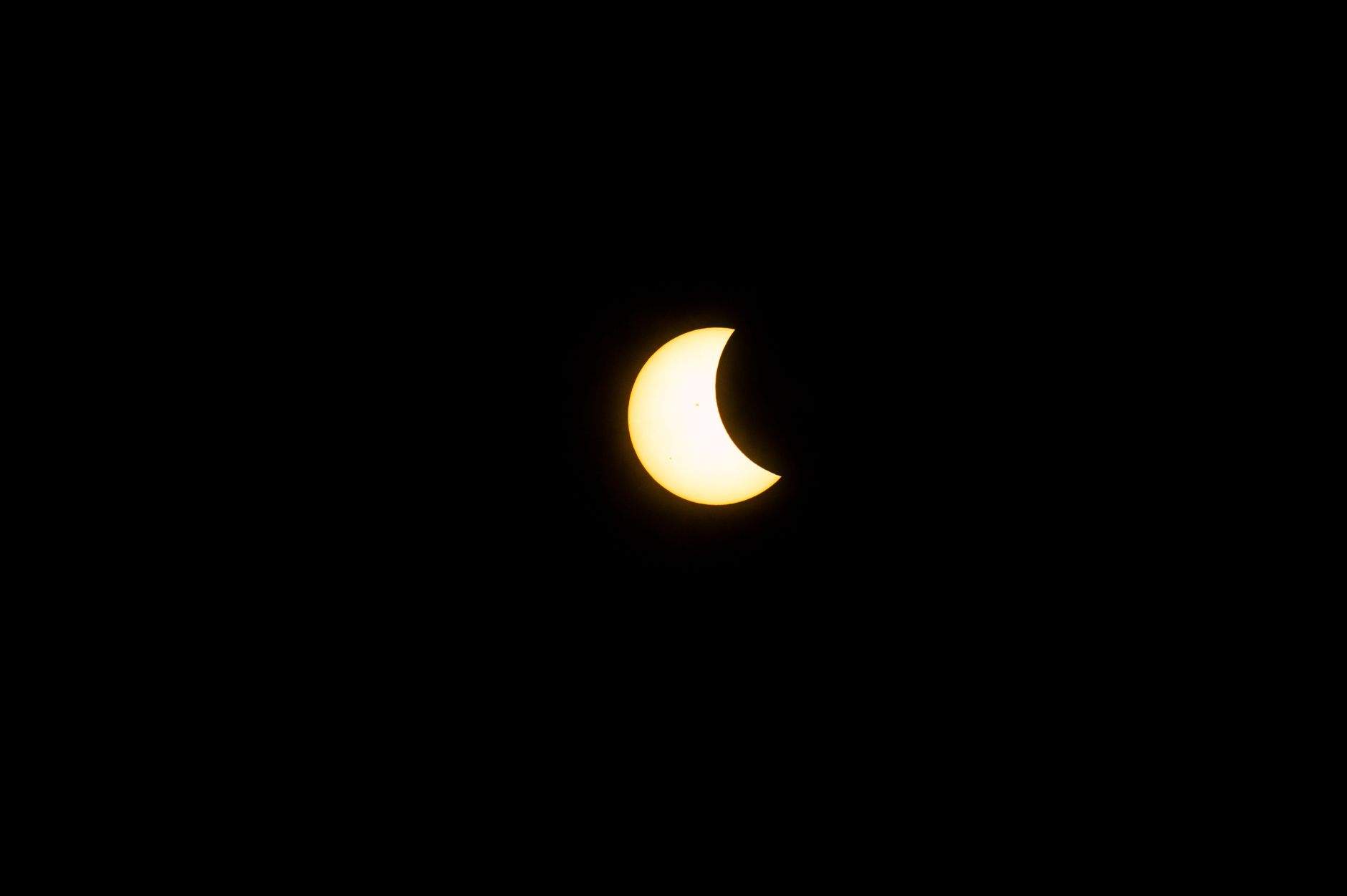
The solar eclipse is a rare and awe-inspiring phenomenon that has captivated humans for centuries. Up to 95% of the Sun will slowly disappear behind the Moon in the most dramatic eclipse visible from the UK since August 1999. This event is a rare opportunity for people to witness the moon’s shadow on the earth’s surface.
The solar eclipse is a complex process that involves the alignment of the sun, moon, and earth. The moon’s orbit is tilted at an angle of about 5 degrees with respect to the earth’s orbit around the sun, which means that the moon’s shadow usually falls above or below the earth. However, when the moon is in the right position, its shadow falls on a specific region of the earth, causing a solar eclipse.
Solar Eclipse Basics
A solar eclipse occurs when the moon passes directly between the earth and the sun, casting a shadow on the earth’s surface. There are three types of solar eclipses: partial, annular, and total. A partial solar eclipse occurs when the moon only partially covers the sun, while an annular solar eclipse occurs when the moon appears smaller than the sun, creating a ring of light around the moon. A total solar eclipse is the rarest and most spectacular type, where the moon completely covers the sun, revealing the sun’s corona.
The solar eclipse has significant cultural and scientific importance. Many ancient cultures believed that solar eclipses were omens or signs from the gods, while modern scientists use solar eclipses to study the sun’s corona and the earth’s atmosphere. The solar eclipse also provides a unique opportunity for scientists to study the sun’s magnetic field and the solar wind.
Viewing the Solar Eclipse
Viewing a solar eclipse requires special precautions to avoid damaging one’s eyes. It is essential to use specialized solar viewing glasses or handheld solar viewers that meet international safety standards. These devices reduce the sun’s intensity to a safe level, allowing viewers to observe the eclipse without risking their eyesight.
- Use specialized solar viewing glasses or handheld solar viewers
- Avoid looking directly at the sun without proper eye protection
- Supervise children and ensure they use proper eye protection
- Do not use regular sunglasses or homemade filters to view the eclipse
The solar eclipse is a rare and awe-inspiring event that offers a unique opportunity for people to witness the moon’s shadow on the earth’s surface. By understanding the science behind the solar eclipse and taking necessary precautions, people can safely enjoy this spectacular phenomenon.
Solar Eclipse and Climate Change
The solar eclipse has significant implications for our understanding of climate change. Scientists use solar eclipses to study the sun’s energy output and its impact on the earth’s climate. The solar eclipse also provides a unique opportunity for scientists to study the earth’s atmosphere and the effects of climate change on the planet.
Conclusion
In conclusion, the solar eclipse is a rare and awe-inspiring phenomenon that offers a unique opportunity for people to witness the moon’s shadow on the earth’s surface. By understanding the science behind the solar eclipse and taking necessary precautions, people can safely enjoy this spectacular event. As scientists continue to study the solar eclipse and its implications for climate change, we can gain a deeper understanding of our planet and the universe we live in.
Source: bbc.co.uk.






Be First to Comment