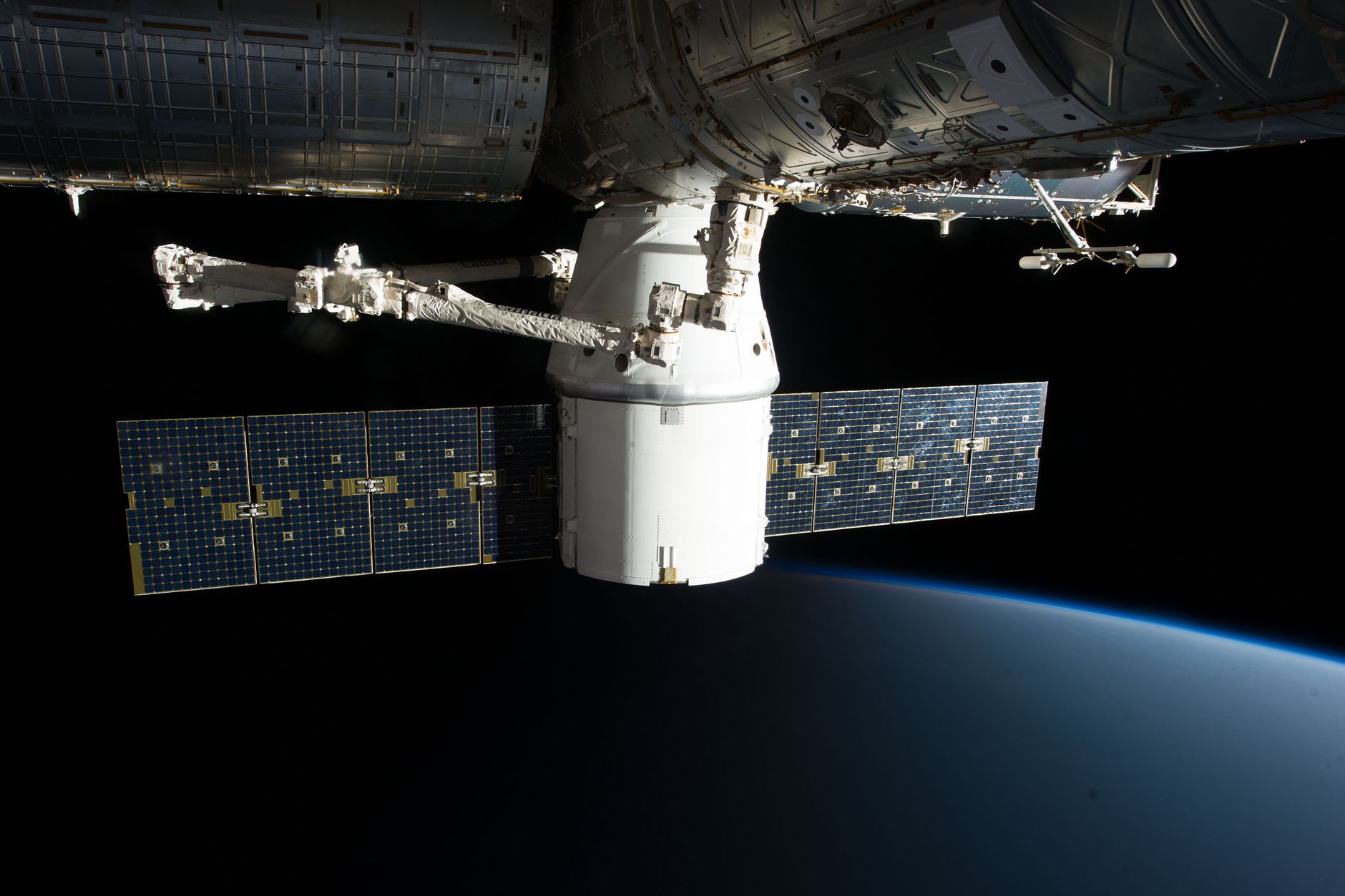
NASA astronaut Chris Williams recently returned to Earth after spending 241 days aboard the International Space Station, where he supported a wide range of scientific investigations and technology demonstrations. The space station, a habitable artificial satellite in low Earth orbit, has been continuously occupied by astronauts and cosmonauts since 2000. Williams’ mission was part of Expedition 73/74, during which he worked alongside Roscosmos cosmonauts Sergey Kud-Sverchkov and Sergei Mikaev.
During their time in space, the crew completed 3,856 orbits of the Earth, covering a distance of over 102 million miles. They also saw the arrival of six visiting spacecraft and the departure of eight. Williams’ work on the space station included supporting research for new cancer treatments and improving in-space manufacturing of materials used in high-performance computers and electronics.
Space Station Research and Operations
The International Space Station is a unique laboratory that allows scientists to conduct research in microgravity, which can lead to breakthroughs in various fields. The space station’s microgravity environment enables researchers to study phenomena that are not possible on Earth, such as the behavior of fluids and materials in zero gravity. Williams’ work on the space station included supporting research on semiconductor crystal growth, which can help advance the commercial space economy and promote Earth-based industries.
The space station is also a testbed for deep space missions, allowing astronauts to develop and refine the skills and technologies needed for future human missions to the Moon and Mars. The crew’s work on the space station helps improve life on Earth and prepares us for the challenges of space exploration.
Chris Williams’ Mission Highlights
Williams’ mission was marked by several notable achievements, including two spacewalks to prepare for space station power system upgrades and to replace a faulty joint on the Canadarm2 robotic arm. He also supported the arrival and departure of several visiting spacecraft, including the SpaceX Crew Dragon and the Boeing CST-100 Starliner.
- 241 days in space
- 3,856 orbits of the Earth
- 102 million miles traveled
- 6 visiting spacecraft arrived
- 8 visiting spacecraft departed
Implications and Future Directions
The success of Williams’ mission and the ongoing research on the International Space Station have significant implications for the future of space exploration. As NASA and its partners continue to push the boundaries of space travel, the space station will remain a critical component of our efforts to explore and understand the universe. The research and technologies developed on the space station will help us overcome the challenges of deep space missions and improve life on Earth.
Conclusion and Next Steps
In conclusion, Chris Williams’ 241-day mission to the International Space Station was a significant achievement that marked an important milestone in the history of space exploration. As we look to the future, it is clear that the space station will continue to play a vital role in our efforts to explore and understand the universe. With its unique laboratory environment and cutting-edge technologies, the space station is poised to help us overcome the challenges of deep space missions and improve life on Earth.
Source: nasa.gov.






Be First to Comment