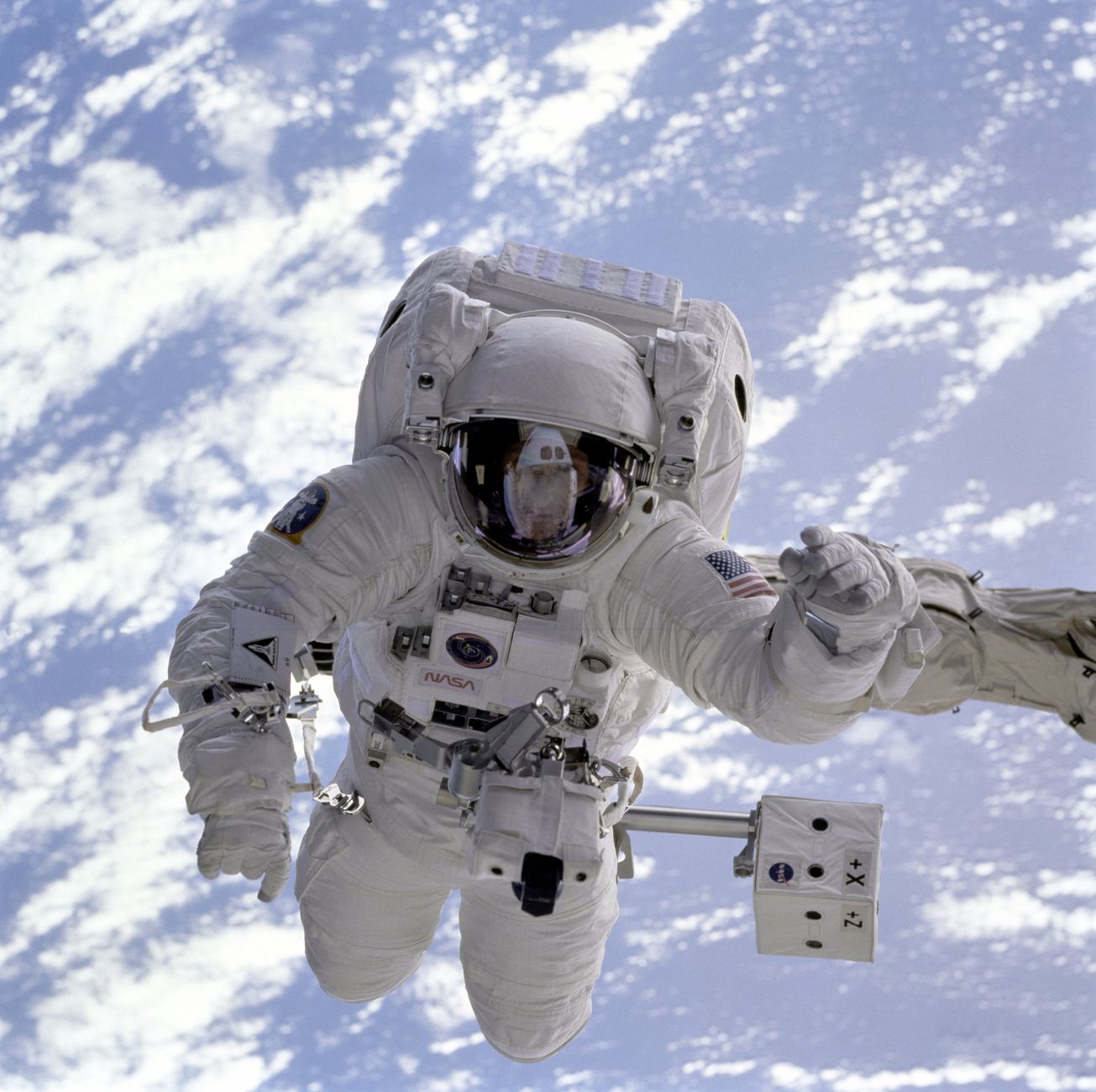
Nasa astronauts Anil Menon and Jessica Meir recently conducted a spacewalk outside the International Space Station (ISS) to install mounting hardware for the future addition of solar arrays. The spacewalk, which lasted 6.5 hours, is a crucial step in boosting the station’s power capabilities. The new solar arrays will provide a significant increase in power generation, enabling the ISS to support more scientific experiments and operations.
The ISS has been in operation for over two decades, and its power generation capabilities have been a limiting factor in its ability to support new missions and experiments. The installation of new solar arrays is expected to increase the station’s power generation by up to 20%. This will enable scientists to conduct more complex and power-hungry experiments, leading to new discoveries and advancements in our understanding of space and the universe.
Spacewalk Operations
The spacewalk, also known as an extravehicular activity (EVA), was carefully planned and executed by the astronauts. The EVA involved the installation of mounting hardware for the new solar arrays, which will be delivered to the ISS on a future mission. The astronauts had to navigate the exterior of the station, using specialized tools and equipment to complete the installation.
The spacewalk was a complex and challenging operation, requiring precise planning and execution. The astronauts had to contend with the harsh conditions of space, including extreme temperatures, radiation, and the lack of gravity. Despite these challenges, the astronauts were able to complete the installation successfully, paving the way for the future addition of the new solar arrays.
Benefits of the New Solar Arrays
The new solar arrays will provide a significant increase in power generation for the ISS. This will enable scientists to conduct more complex and power-hungry experiments, leading to new discoveries and advancements in our understanding of space and the universe. Some of the benefits of the new solar arrays include:
- Increased power generation: The new solar arrays will provide up to 20% more power than the current arrays, enabling the ISS to support more scientific experiments and operations.
- Improved efficiency: The new solar arrays will be more efficient than the current arrays, reducing the amount of energy lost as heat and increasing the overall efficiency of the station’s power generation system.
- Enhanced scientific capabilities: The increased power generation will enable scientists to conduct more complex and power-hungry experiments, leading to new discoveries and advancements in our understanding of space and the universe.
The installation of the new solar arrays is a significant milestone in the evolution of the ISS. The station has been in operation for over two decades, and its power generation capabilities have been a limiting factor in its ability to support new missions and experiments. The new solar arrays will provide a significant increase in power generation, enabling the ISS to support more scientific experiments and operations.
Future of the ISS
The ISS is a critical component of NASA’s plans for space exploration. The station provides a unique laboratory for scientists to conduct experiments and test new technologies in microgravity. The installation of the new solar arrays is a key step in ensuring the long-term sustainability of the station, enabling it to continue to support scientific research and experimentation for years to come.
Conclusion
The recent spacewalk conducted by astronauts Anil Menon and Jessica Meir is a significant milestone in the evolution of the ISS. The installation of the new solar arrays will provide a significant increase in power generation, enabling the station to support more scientific experiments and operations. As the ISS continues to evolve and improve, it will remain a critical component of NASA’s plans for space exploration, enabling scientists to conduct new and innovative research in the unique environment of microgravity.
Source: bbc.co.uk.






Be First to Comment