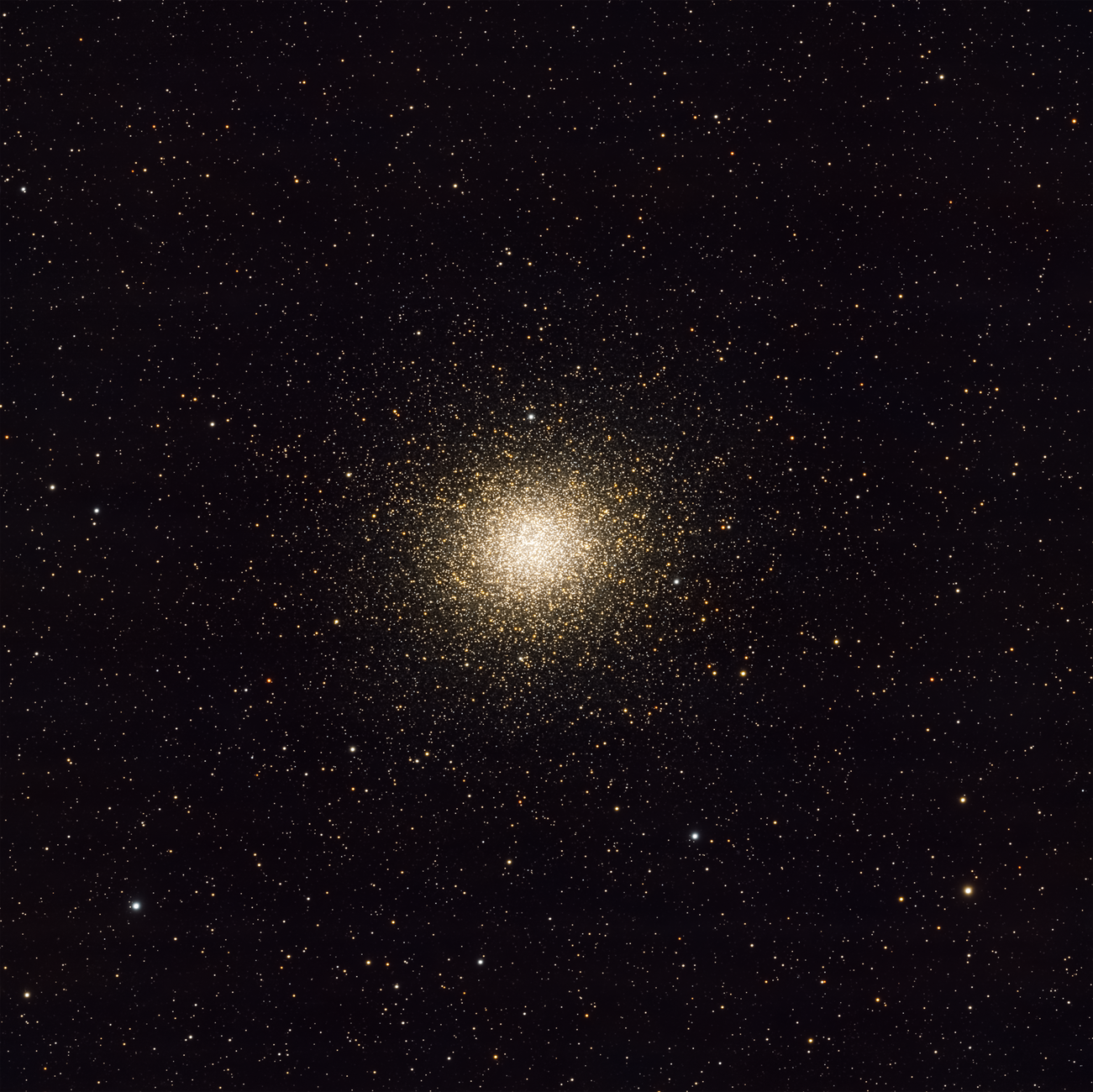
The Hubble Space Telescope has captured a stunning image of Messier 3, a densely packed star cluster that provides valuable insights into the universe’s ancient formation. Star clusters, like Messier 3, are spherical collections of gravitationally bound stars that formed at roughly the same time from the same cloud of gas. This shared origin gives the stars within a cluster similar ages, making them fascinating subjects for astronomers to study.
Astronomers believe that globular clusters like Messier 3 may have originated from the merger of smaller clusters in the early universe. This theory is supported by the fact that many globular clusters, including Messier 3, exhibit complex structures and a wide range of star ages.
Understanding Star Clusters
Star clusters are made up of ancient stars that formed at roughly the same time from the same cloud of gas. There are around 150 known globular clusters sprinkled around the outer regions of the Milky Way galaxy. These clusters are thought to have formed during the early days of the universe, when gas and dust were more densely packed.
The study of star clusters like Messier 3 can provide valuable insights into the universe’s evolution and the formation of galaxies. By analyzing the ages and compositions of the stars within a cluster, astronomers can gain a better understanding of the universe’s history and the processes that shaped it.
The Significance of Messier 3
Messier 3 is one of the Milky Way galaxy’s most massive globular clusters, containing hundreds of thousands of stars. The cluster is thought to have formed around 8 billion years ago, during a period of intense star formation in the early universe. The image captured by Hubble showcases the cluster’s densely packed core, where stars are packed tightly together.
- Globular clusters are spherical collections of gravitationally bound stars
- Star clusters formed at roughly the same time from the same cloud of gas
- Around 150 known globular clusters are sprinkled around the outer regions of the Milky Way
The study of Messier 3 and other star clusters can provide valuable insights into the universe’s evolution and the formation of galaxies. By analyzing the ages and compositions of the stars within a cluster, astronomers can gain a better understanding of the universe’s history and the processes that shaped it.
Implications and Future Research
The discovery of complex structures and a wide range of star ages within globular clusters like Messier 3 has significant implications for our understanding of the universe’s evolution. Further research is needed to fully understand the origins and properties of these clusters, and to determine how they fit into the broader context of galaxy formation and evolution.
Conclusion
In conclusion, the study of star clusters like Messier 3 provides a fascinating glimpse into the universe’s ancient formation. The Hubble Space Telescope’s latest image of Messier 3 is a powerful reminder of the awe-inspiring beauty and complexity of the universe, and the many mysteries that remain to be unraveled by astronomers and scientists.
Source: nasa.gov.





Be First to Comment