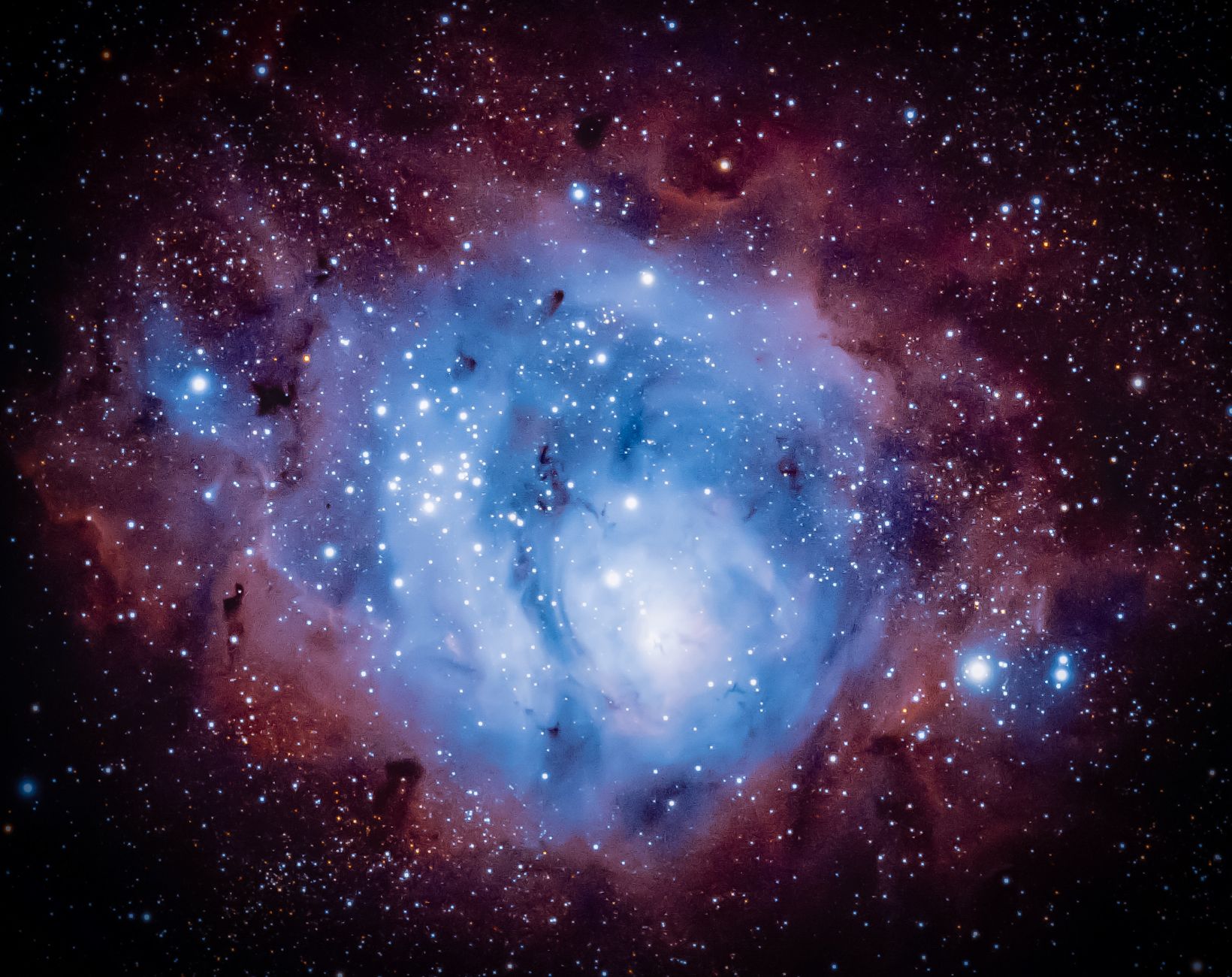
The stellar nursery, a region of space where new stars are born, has been captured in stunning detail by NASA’s Hubble Space Telescope. This particular stellar nursery, known as LH 95, is home to approximately 2,500 young stars that are still in the early stages of their development. The Hubble image reveals a breathtaking vista of crimson clouds of gas and dust, interspersed with sparkling blue and white stars.
The discovery of these young stars has significant implications for our understanding of star formation. Scientists have long believed that stars form from giant molecular clouds of gas and dust, which collapse under their own gravity. However, the process of star formation is complex and not yet fully understood. The study of stellar nurseries like LH 95 provides valuable insights into the early stages of star development.
Understanding Stellar Nurseries
A stellar nursery is a region of space where the conditions are ripe for star formation. These regions are characterized by dense clouds of gas and dust, which provide the raw materials for star formation. As the gas and dust collapse, they begin to spin faster and faster, eventually forming a protostar. The protostar continues to collapse, with the core heating up until nuclear fusion begins, marking the birth of a new star.
The study of stellar nurseries like LH 95 has revealed that the process of star formation is not a single event, but rather a series of complex stages. The discovery of multiple generations of stars living side by side in LH 95 offers fresh clues about how star formation unfolds over time. This suggests that the process of star formation may be more dynamic and ongoing than previously thought.
The Importance of Hubble
The Hubble Space Telescope has played a crucial role in our understanding of stellar nurseries and star formation. With its advanced optics and sensitive instruments, Hubble has been able to capture stunning images of these regions, revealing details that were previously unknown. The latest image of LH 95 is a testament to Hubble’s capabilities, providing a breathtaking view of the stellar nursery and its inhabitants.
Key Features of Stellar Nurseries
- Dense clouds of gas and dust
- Protostars and young stars
- Multiple generations of stars
- Ongoing star formation
The study of stellar nurseries like LH 95 has significant implications for our understanding of the universe. By studying these regions, scientists can gain insights into the early stages of star development and the processes that shape the formation of galaxies. The discovery of multiple generations of stars living side by side in LH 95 raises questions about the role of stellar nurseries in the evolution of galaxies.
Future Research Directions
As scientists continue to study stellar nurseries like LH 95, they will be able to refine our understanding of star formation and the role of these regions in the universe. Future research directions may include the study of the magnetic fields and turbulence within stellar nurseries, as well as the impact of stellar nurseries on the surrounding interstellar medium. By exploring these questions, scientists can gain a deeper understanding of the complex processes that shape the universe.
Source: sciencedaily.com.






Be First to Comment