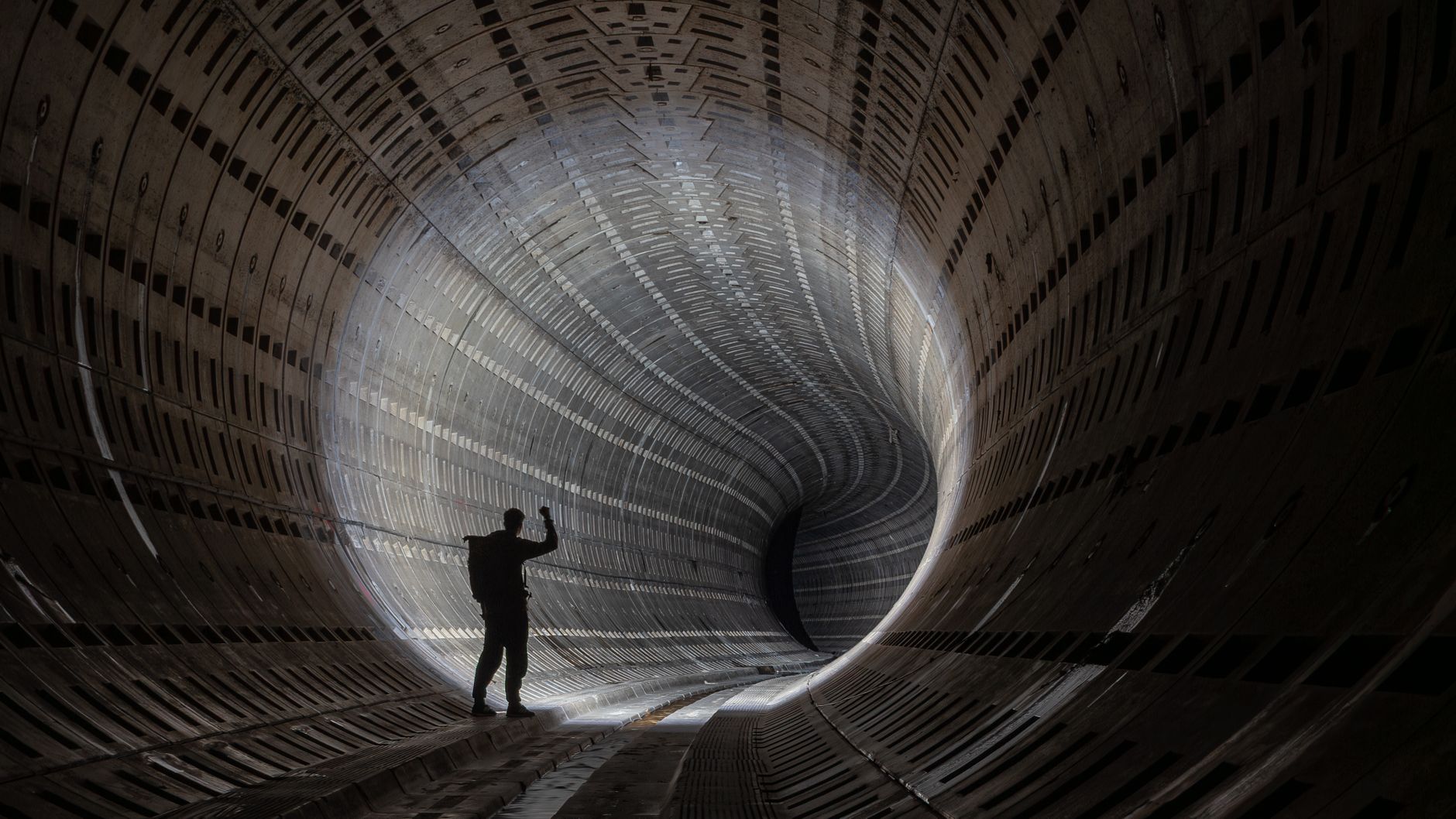
NASA’s newest wind tunnel, the Flight Dynamics Research Facility, has opened at the Langley Research Center in Hampton, Virginia. The wind tunnel is the first major new facility of its kind in over 40 years and will support research and technology development to advance the agency’s aeronautics, exploration, and science goals.
The state-of-the-art facility will play a crucial role in establishing a sustained human presence on the lunar surface through the Artemis program and the development of a Moon Base. The wind tunnel will enable researchers to test and refine new aircraft and spacecraft designs, reducing the risk of failure and improving overall performance.
Wind Tunnel Technology
The wind tunnel uses advanced technology to simulate a wide range of flight conditions, from subsonic to supersonic speeds. This will allow researchers to test the aerodynamics of new aircraft and spacecraft designs, as well as the performance of existing vehicles.
The facility will also support the development of new materials and technologies, such as advanced composites and propulsion systems. This will enable the creation of more efficient and sustainable aircraft and spacecraft, reducing the environmental impact of air travel and space exploration.
Research and Development
The wind tunnel will be used to support a wide range of research and development activities, including the testing of new aircraft and spacecraft designs, the development of new materials and technologies, and the simulation of complex flight scenarios.
- Testing of new aircraft and spacecraft designs
- Development of new materials and technologies
- Simulation of complex flight scenarios
The facility will also support the training of engineers and researchers, providing them with hands-on experience and access to state-of-the-art equipment and technology.
Implications and Future Directions
The opening of the wind tunnel marks an important milestone in the development of NASA’s aeronautics and exploration programs. The facility will play a crucial role in advancing the agency’s goals, including the establishment of a sustained human presence on the lunar surface and the development of a Moon Base.
The wind tunnel will also support the development of new technologies and materials, enabling the creation of more efficient and sustainable aircraft and spacecraft. This will have important implications for the environment, reducing the impact of air travel and space exploration on the planet.
Conclusion
In conclusion, the wind tunnel at NASA’s Langley Research Center is a state-of-the-art facility that will support research and technology development to advance the agency’s aeronautics, exploration, and science goals. The facility will play a crucial role in establishing a sustained human presence on the lunar surface and the development of a Moon Base, and will support the development of new technologies and materials to reduce the environmental impact of air travel and space exploration.
Source: nasa.gov.






Be First to Comment