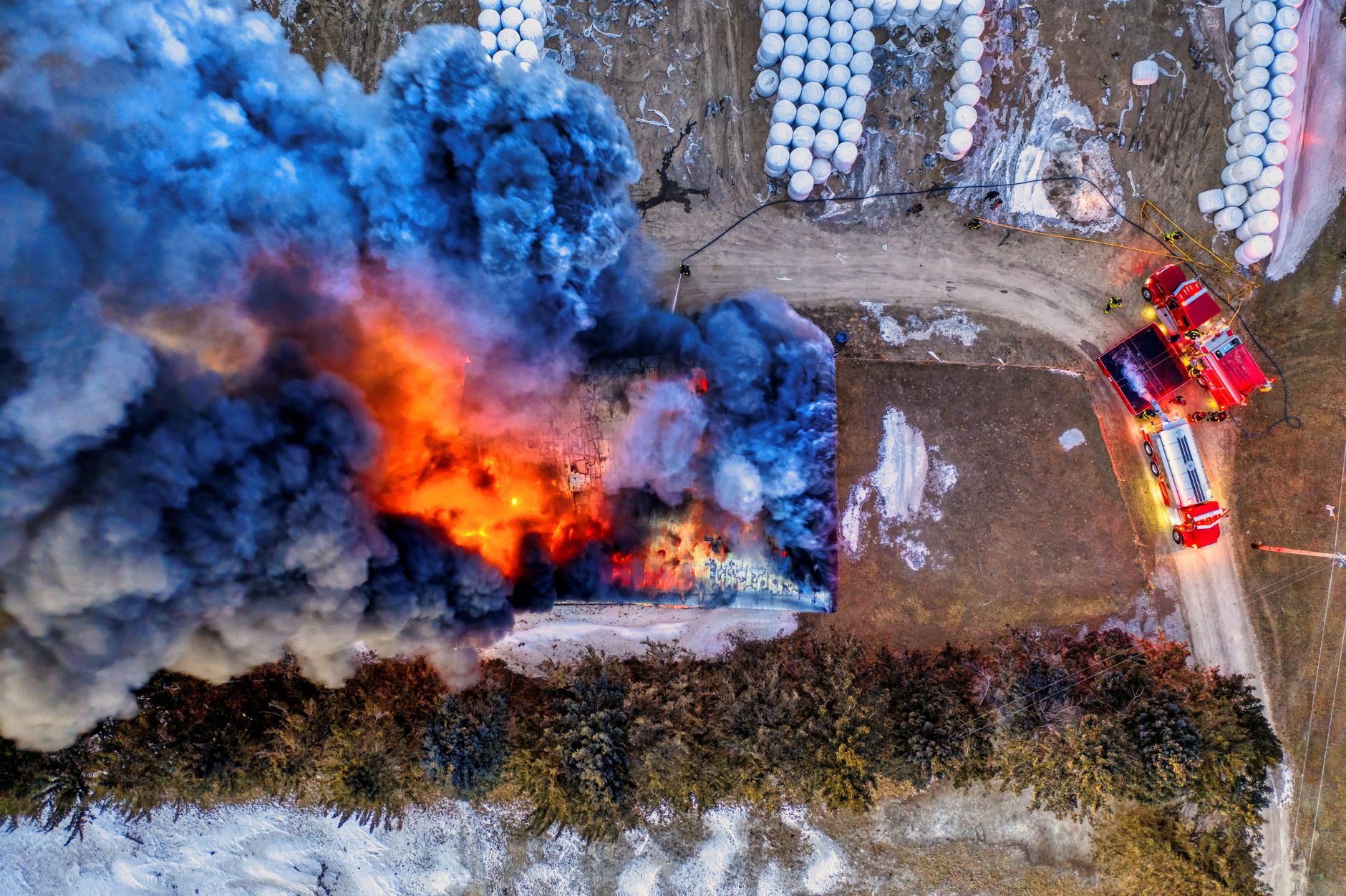
Firefighting drones are being developed to combat wildfires, a nearly year-round risk in the US. These drones are capable of spraying water and fire retardants, demonstrating a possible rapid-response tool for firefighting. As climate change transforms wildfire season, companies and fire agencies are testing whether drones can help firefighting crews respond more quickly to small fires.
The use of drones in firefighting is still in its early stages, but it has the potential to revolutionize the way we combat wildfires. Most drones are significantly smaller than crewed aircraft and have shorter flight ranges, meaning they cannot replace large airtankers in delivering massive payloads of water or other fire-suppressing payloads to remote wildfires.
Firefighting Drones: A New Tool in the Fight Against Wildfires
However, drones can help firefighting crews respond more quickly to small fires and put them out before they become more destructive. The California Department of Forestry and Fire Protection, also known as CAL FIRE, ran its own field test involving five autonomous drones that worked together to deploy between 500 and 1,000 gallons of foam combined for suppressing fires.
This demonstration was organized with the help of the nonprofit FireWERX and the California-based company Seneca, which is making the drones commercially available starting in 2026. The $11 million XPRIZE competition is also driving innovation in this area, with companies and fire agencies competing to develop the most effective firefighting drones.
The Benefits of Firefighting Drones
There are several benefits to using firefighting drones, including:
- Quick response times: Drones can respond quickly to small fires, helping to put them out before they become more destructive.
- Increased safety: Drones can help reduce the risk of injury or death to firefighters by allowing them to respond to fires from a safe distance.
- Improved accuracy: Drones can be equipped with precision spraying systems, allowing for more accurate deployment of water and fire retardants.
- Cost savings: Drones can be more cost-effective than traditional firefighting methods, especially for small fires.
- Environmental benefits: Drones can help reduce the environmental impact of wildfires by responding quickly and effectively to small fires.
Challenges and Limitations
While firefighting drones have the potential to revolutionize the way we combat wildfires, there are still several challenges and limitations to overcome. These include the need for more advanced technology, better communication systems, and more effective deployment strategies.
Conclusion
In conclusion, firefighting drones are a new and innovative tool in the fight against wildfires. With their quick response times, increased safety, improved accuracy, cost savings, and environmental benefits, they have the potential to make a significant impact in the battle against wildfires. As the technology continues to evolve and improve, we can expect to see more widespread adoption of firefighting drones in the US and around the world.
Source: arstechnica.com.





Be First to Comment