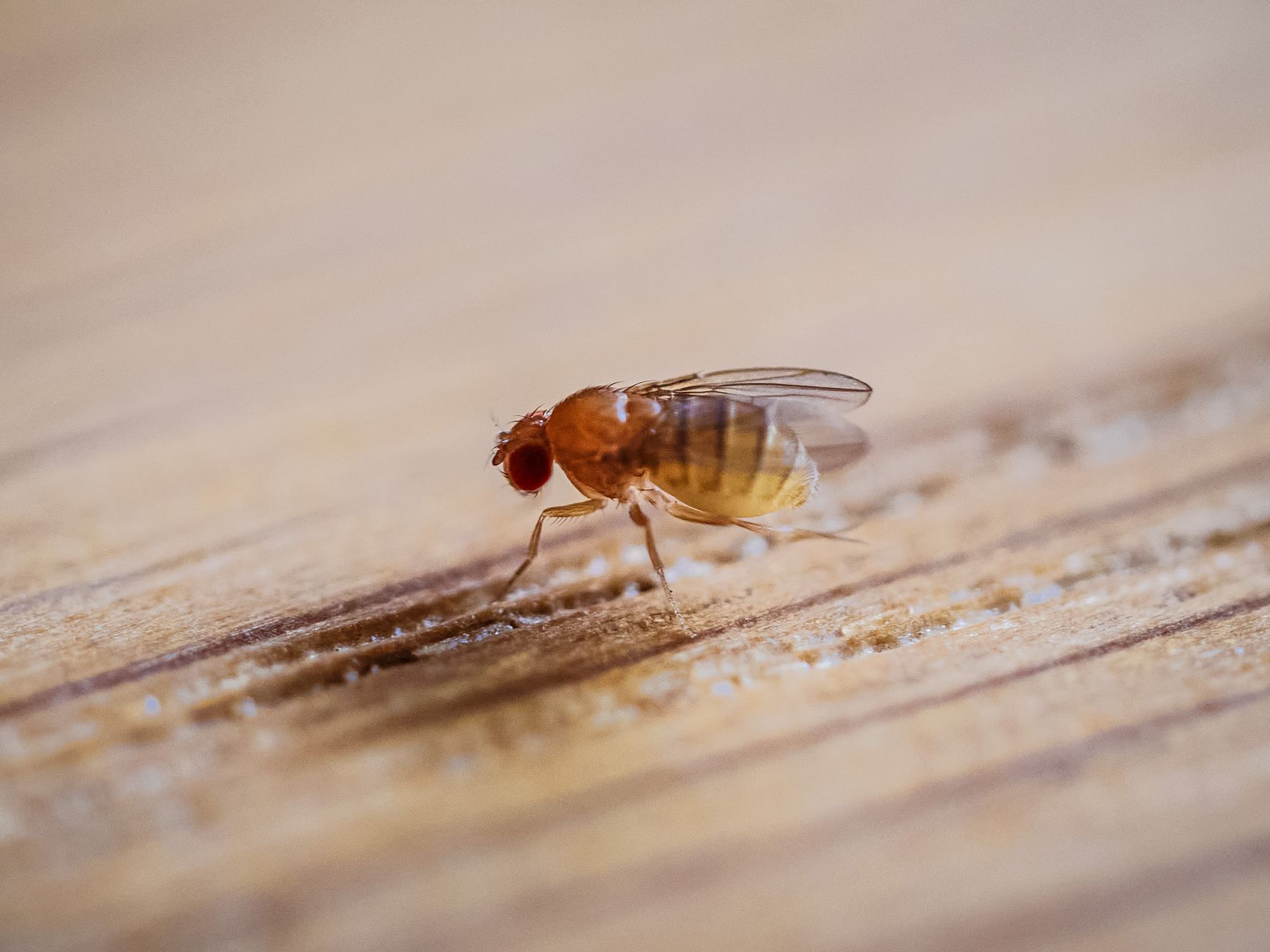
Fruit fly navigation is a complex process that involves tracking invisible ribbons of smell to find their source. Fruit flies use their sense of smell to navigate towards food, mates, and other essential resources. The process of fruit fly navigation is not fully understood, but recent research has shed some light on how these insects manage to track down their targets with such accuracy.
One of the key challenges in understanding fruit fly navigation is the chaotic nature of the odor plumes that they follow. These plumes are made up of dense chemical filaments that are laced through long stretches of clean air, making it difficult for the fly to track them. Despite this, fruit flies are able to navigate towards their targets with remarkable accuracy, using a process that is still not fully understood.
Fruit Fly Navigation: The Surge and Cast Model
For a long time, biologists believed that fruit flies used a simple surge and cast model to navigate towards their targets. This model suggested that the fly would fly upwind until it lost the scent, and then fly side to side in an attempt to catch it again. However, this model has been largely discredited, and researchers are now looking for more complex explanations for fruit fly navigation.
Recent research has shown that fruit flies use a much more advanced system to navigate towards their targets. This system involves the use of olfactory neurons in the fly’s antennae, which are able to detect the chemical cues that make up the odor plume. The fly is then able to use this information to track the plume and navigate towards its source.
The Science Behind Fruit Fly Navigation
So, how do fruit flies manage to track down their targets with such accuracy? The answer lies in the complex system of olfactory neurons that are found in the fly’s antennae. These neurons are able to detect the chemical cues that make up the odor plume, and the fly is then able to use this information to track the plume and navigate towards its source.
The process of fruit fly navigation is still not fully understood, but researchers are making progress in uncovering the secrets of this complex system. By studying the behavior of fruit flies and the neural mechanisms that underlie their navigation, scientists hope to gain a better understanding of how these insects are able to track down their targets with such accuracy.
Key Insights into Fruit Fly Navigation
- Fruit flies use their sense of smell to navigate towards food, mates, and other essential resources
- The odor plumes that fruit flies follow are made up of dense chemical filaments that are laced through long stretches of clean air
- Fruit flies use a complex system of olfactory neurons to detect the chemical cues that make up the odor plume
- The surge and cast model is no longer considered a viable explanation for fruit fly navigation
As researchers continue to study the behavior of fruit flies and the neural mechanisms that underlie their navigation, we are likely to learn more about the complex systems that these insects use to track down their targets. By gaining a better understanding of fruit fly navigation, scientists hope to develop new insights into the biology of these insects and the ways in which they interact with their environment.
Conclusion: The Future of Fruit Fly Navigation Research
In conclusion, fruit fly navigation is a complex and fascinating process that is still not fully understood. By continuing to study the behavior of these insects and the neural mechanisms that underlie their navigation, researchers hope to gain a better understanding of how they are able to track down their targets with such accuracy. As we learn more about the biology of fruit flies and the ways in which they interact with their environment, we are likely to develop new insights into the complex systems that underlie their behavior.
Source: arstechnica.com.






Be First to Comment