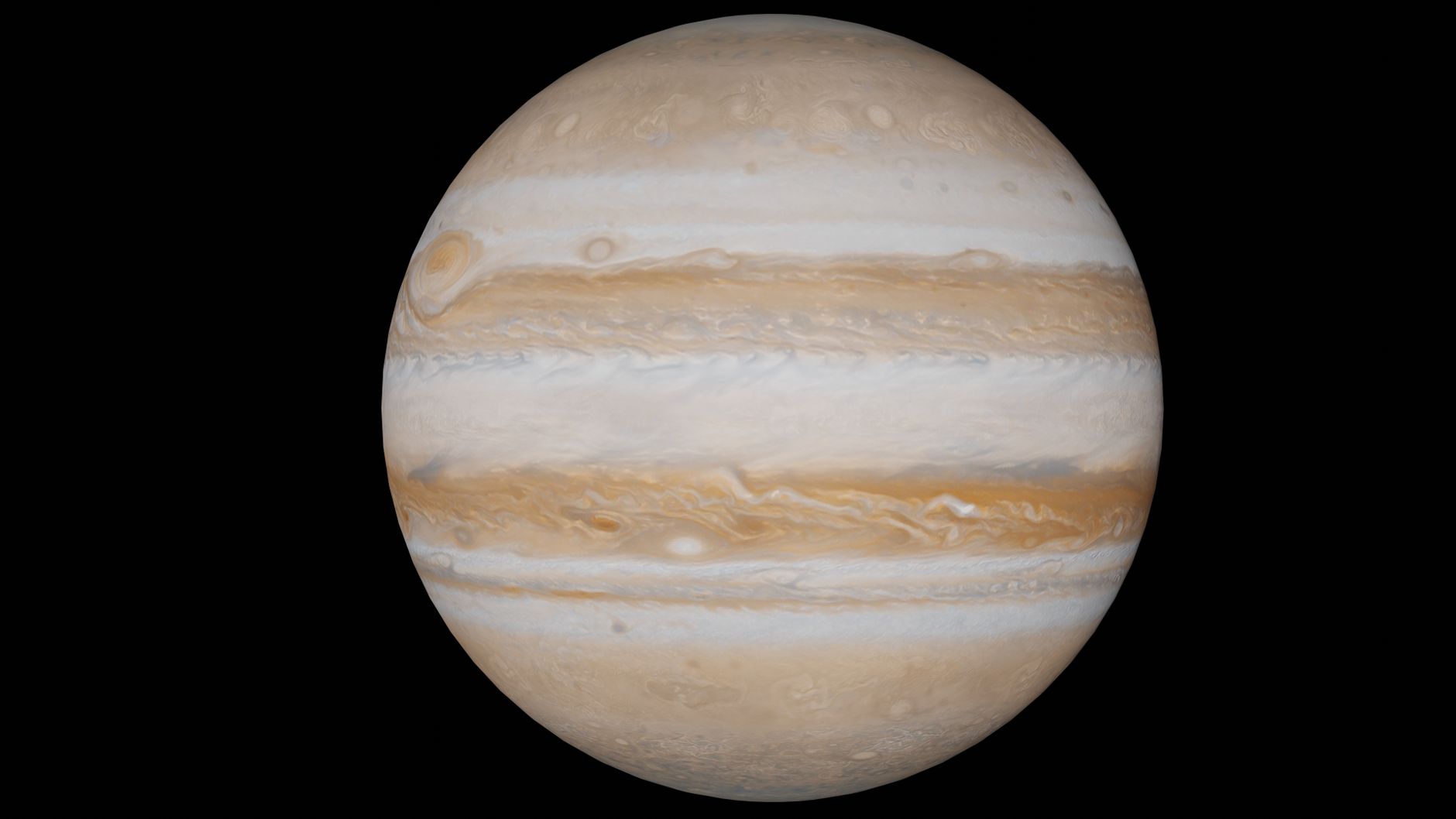
The discovery of a jupiter size planet that survived the death of its star has sent shockwaves through the astronomical community. WD 1856 b, a gas giant similar in size to Jupiter, is the only confirmed case of a planet that survived the death of a Sun-like star. This phenomenon has raised many questions about the formation and evolution of planetary systems.
WD 1856 b was an accidental discovery made by astronomers using the TESS observatory in 2020. The team was searching for small objects like comets or asteroids that might transit across the face of white dwarfs, the remains of Sun-like stars that have already gone through a red-giant phase.
jupiter size planet formation
The formation of a jupiter size planet like WD 1856 b is still not well understood. Theories suggest that these planets form in the outer reaches of a star system, where temperatures are low enough for volatile compounds to condense into solid particles. These particles then stick together, eventually forming a large planet.
However, the survival of WD 1856 b during its star’s death is a mystery. As the star expanded into a red giant, it should have engulfed the planet, causing it to be destroyed or significantly altered. The fact that WD 1856 b survived this process suggests that the planet may have been ejected from its original orbit or that the star’s expansion was not as severe as expected.
implications for planetary science
The discovery of WD 1856 b has significant implications for our understanding of planetary science. It suggests that planets can survive the death of their stars, potentially leading to the formation of new planetary systems. This has important implications for the search for life beyond Earth, as it suggests that planets may be able to survive in a variety of environments.
- WD 1856 b is the only confirmed case of a planet that survived the death of a Sun-like star
- The planet is similar in size to Jupiter
- The discovery was made using the TESS observatory in 2020
- The formation of jupiter size planets is still not well understood
- The survival of WD 1856 b during its star’s death is a mystery
future research directions
Further research is needed to understand the formation and evolution of WD 1856 b. Astronomers will use a variety of telescopes, including the James Webb Space Telescope, to study the planet’s atmosphere and composition. This will help to determine the planet’s origins and whether it is capable of supporting life.
conclusion
The discovery of WD 1856 b, a jupiter size planet that survived the death of its star, is a significant breakthrough in the field of astronomy. It has important implications for our understanding of planetary science and the search for life beyond Earth. As researchers continue to study this planet, we may uncover even more secrets about the universe and its many mysteries.
Source: arstechnica.com.






Be First to Comment