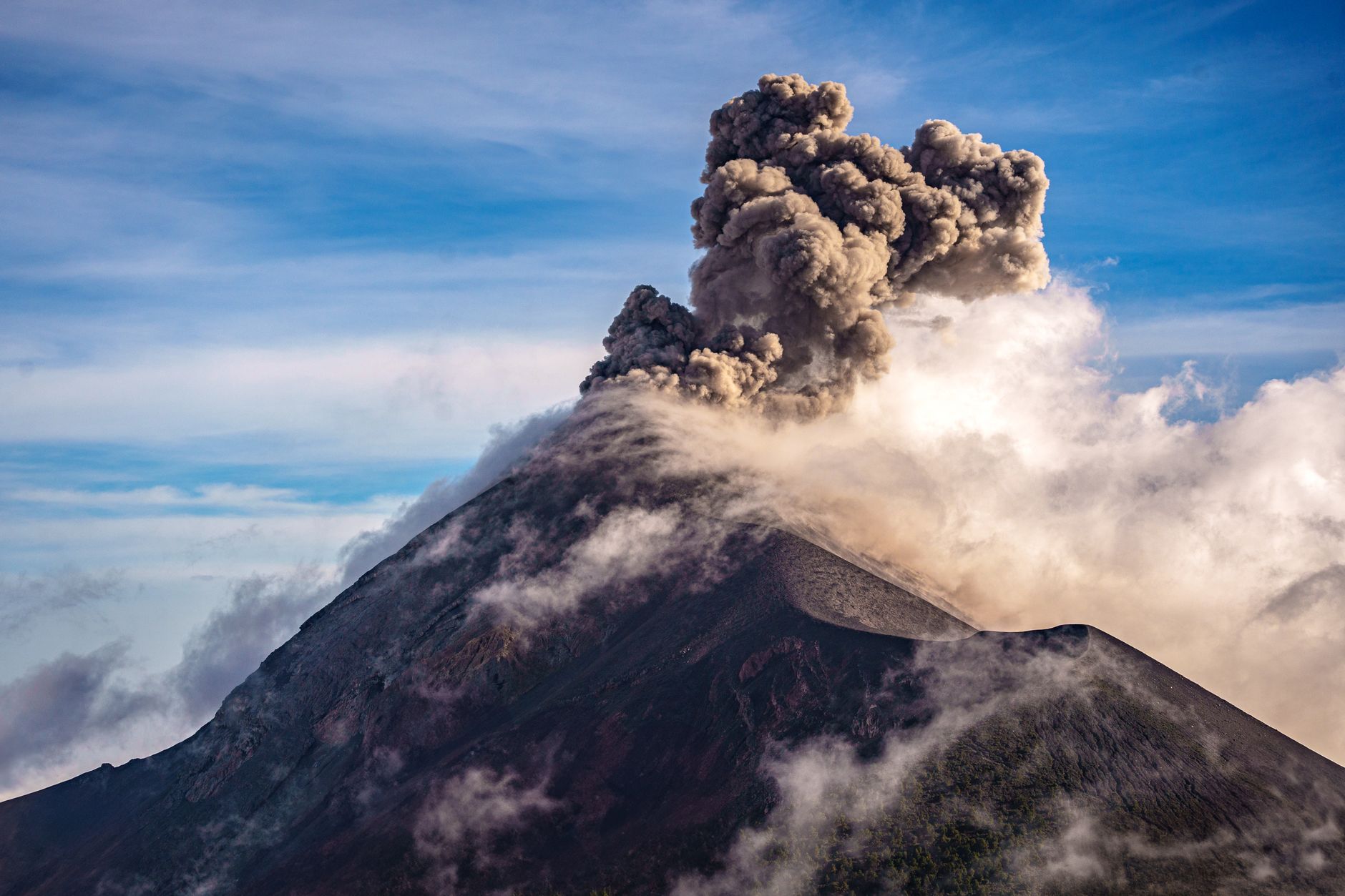
The mount toba eruption was a massive volcanic event that occurred around 74,000 years ago, and its effects on the environment and human history are still being studied today. This eruption was the largest in the last 2.6 million years, and it is believed to have released thousands of cubic kilometers of magma into the atmosphere. The mount toba eruption was so powerful that it is thought to have caused a significant cooling of the planet, which could have had a major impact on the survival of early human populations.
However, recent research suggests that the effects of the mount toba eruption may not have been as severe as previously thought. A team of scientists led by Jinheum Park, a geoscientist at Johannes Gutenberg University in Mainz, Germany, has been studying the records of the eruption in the mud taken from the bottom of a small crater lake on the Kenya-Tanzania border. They found that the effects of the eruption lasted for less than two years and amounted to perhaps half a degree of cooling.
Understanding the mount toba eruption
The mount toba eruption was a complex event that involved the release of large amounts of sulfur dioxide into the stratosphere. This sulfur dioxide became a haze of tiny droplets that reflected sunlight back into space, causing a cooling effect on the planet. However, the researchers found that the larger sulfate aerosols settled quickly, because they were heavier, which made them less effective in scattering incoming solar radiation.
This discovery has significant implications for our understanding of the mount toba eruption and its impact on the environment. It suggests that the eruption may not have been as catastrophic as previously thought, and that the effects of the eruption were relatively short-lived. However, it also highlights the importance of continued research into the eruption and its effects, in order to better understand the complex interactions between volcanic activity and the environment.
The impact of the mount toba eruption on human history
The mount toba eruption has been suggested as a possible factor in the near-extinction of the human species. The idea is that the eruption could have caused a significant cooling of the planet, which would have made it difficult for early human populations to survive. However, the recent research suggests that this may not have been the case, and that the effects of the eruption were relatively mild.
Despite this, the mount toba eruption is still an important event in human history, and it has had a significant impact on our understanding of the environment and the effects of volcanic activity. It highlights the importance of continued research into the eruption and its effects, in order to better understand the complex interactions between volcanic activity and the environment.
Key facts about the mount toba eruption
- The mount toba eruption occurred around 74,000 years ago
- The eruption was the largest in the last 2.6 million years
- The eruption released thousands of cubic kilometers of magma into the atmosphere
- The effects of the eruption lasted for less than two years
- The eruption caused a cooling of the planet of perhaps half a degree
Conclusion and future research directions
In conclusion, the mount toba eruption was a significant event in human history, and it has had a lasting impact on our understanding of the environment and the effects of volcanic activity. While the recent research suggests that the effects of the eruption may not have been as severe as previously thought, it highlights the importance of continued research into the eruption and its effects. Further study is needed to fully understand the complex interactions between volcanic activity and the environment, and to better understand the impact of the mount toba eruption on human history.
Source: arstechnica.com.





Be First to Comment