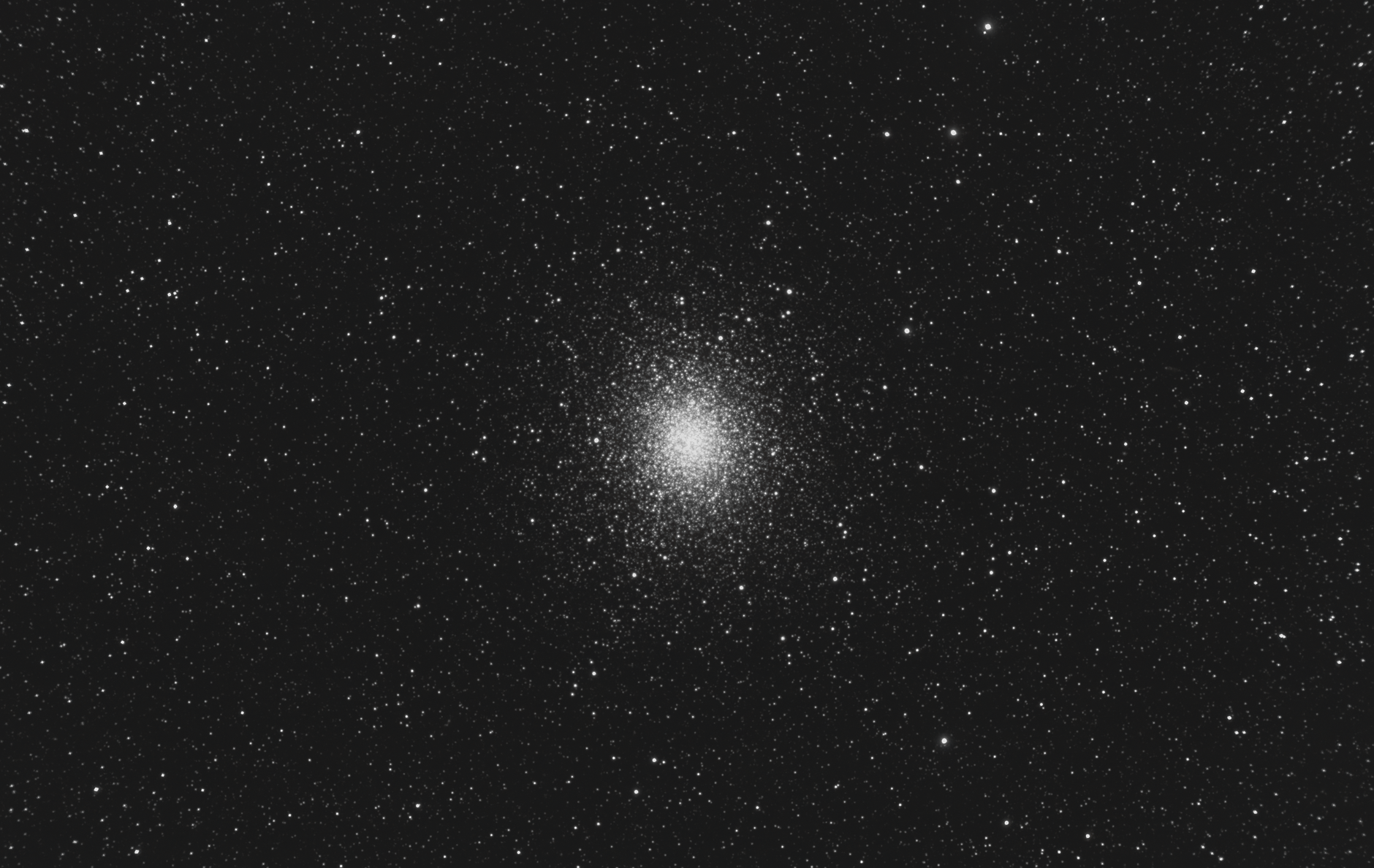
The globular cluster, a spherical collection of stars bound together by their mutual gravity, is one of the most fascinating objects in the universe. Located in the outer halo of our Milky Way galaxy, globular cluster NGC 6426 is a stunning example of these ancient star clusters. With NASA’s Hubble Space Telescope, we can now gaze at this stellar sparkler, which is almost as old as the universe itself, with an estimated age of 13 billion years.
The Hubble Space Telescope has been instrumental in our understanding of the universe, and its latest image of the globular cluster is no exception. The image, which was released to celebrate the United States’ 250th anniversary, showcases the cluster’s red, white, and blue stars, which glitter like a sparkler being waved on a dark night.
Globular Cluster Formation
Globular clusters are thought to form as a unit from the same collapsing cloud of gas, and thus the stars in them typically have similar ages. The stars in globular clusters tend to be ancient, with some of the oldest stars in the universe found in these clusters. The globular cluster NGC 6426 is no exception, with its stars having low metallicity, which means they have fewer elements that are heavier than hydrogen and helium.
Researchers have found evidence for two chemically distinct populations of stars in NGC 6426, indicating that the slightly younger and more metallic stars were enriched with material from the explosive deaths of the cluster’s earlier stars. This process, known as stellar evolution, is crucial in our understanding of the universe, as it helps us understand how stars are born, live, and die.
Stellar Evolution and the Universe
The study of globular clusters like NGC 6426 is essential in our understanding of the universe. By analyzing the stars in these clusters, we can gain insights into the formation and evolution of the galaxy. The Hubble Space Telescope has been instrumental in this research, providing high-quality images and data that have helped us better understand the universe.
The colors in the Hubble image of NGC 6426 are chosen based on standard image processing techniques to best represent the wavelengths of light that pass through the filters used in the observation. Blue indicates the shorter wavelengths that are visible light, while red depicts the longer wavelengths of visible light, as well as some near-infrared light. This color representation helps us understand the temperature and composition of the stars in the cluster.
Implications and Questions to Watch
The discovery of the globular cluster NGC 6426 and its ancient stars has significant implications for our understanding of the universe. It raises questions about the formation and evolution of the galaxy, as well as the role of globular clusters in the universe. Some of the questions to watch include:
- How do globular clusters form and evolve over time?
- What is the role of globular clusters in the formation and evolution of the galaxy?
- How do the stars in globular clusters interact with each other and with the surrounding interstellar medium?
Conclusion
In conclusion, the globular cluster NGC 6426 is a fascinating object that provides insights into the formation and evolution of the universe. With the help of the Hubble Space Telescope, we can now gaze at this stellar sparkler, which is almost as old as the universe itself. As we continue to study globular clusters and the universe, we may uncover more secrets about the cosmos and our place within it.
Source: science.nasa.gov.






Be First to Comment