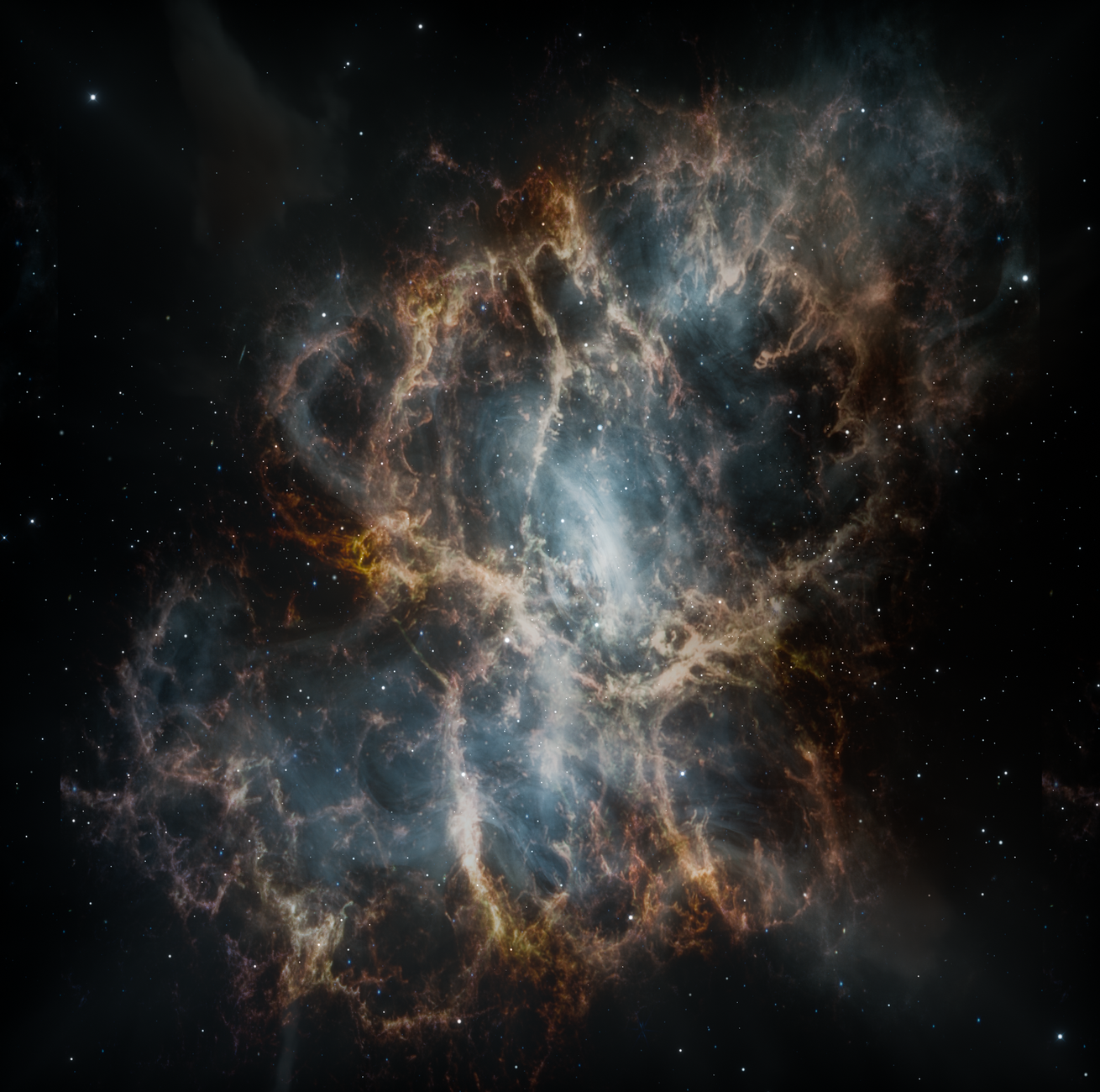
Astronomers have made a groundbreaking discovery in the Milky Way’s galactic center, uncovering evidence of a possible supernova remnant in close proximity to the supermassive black hole. This finding, based on data from NASA’s Chandra X-ray Observatory and the European Space Agency’s XMM-Newton mission, has significant implications for our understanding of the galaxy’s central region and the role of supernovae in shaping its evolution.
The Galactic Center: A Region of Extreme Activity
The Milky Way’s galactic center is a complex and dynamic region, featuring a supermassive black hole with a mass of approximately four million times that of the sun. This region is also home to a diverse range of astrophysical phenomena, including massive star clusters, dense gas clouds, and powerful magnetic fields. The discovery of a potential supernova remnant in this region provides valuable insights into the galaxy’s history and the processes that have shaped its central region.
Uncovering the Supernova Remnant
The potential supernova remnant was identified through the analysis of X-ray data from Chandra and XMM-Newton, which revealed a “blob” of X-ray emission in the vicinity of the galactic center. This emission is thought to originate from the remains of a massive star that exploded as a supernova, leaving behind a cloud of hot, ionized gas. The location of the supernova remnant is particularly interesting, as it is situated within a bubble of gas known as an H II region, which is surrounding a massive, young star.
The X-ray data were combined with radio observations from the MeerKAT telescope in South Africa and optical data from the Pan-STARRS telescopes in Hawaii, creating a stunning composite image of the region. This image showcases the complex interplay between different astrophysical phenomena in the galactic center, with the potential supernova remnant appearing as a bright, blue blob of X-ray emission.
Implications and Future Research Directions
The discovery of a potential supernova remnant in the Milky Way’s galactic center has significant implications for our understanding of the galaxy’s evolution and the role of supernovae in shaping its central region. Supernovae are powerful explosions that can inject large amounts of energy and heavy elements into the surrounding interstellar medium, influencing the formation of new stars and planets.
Further research is needed to confirm the nature of the potential supernova remnant and to study its properties in greater detail. The James Webb Space Telescope, with its unparalleled infrared sensitivity, is poised to play a key role in this research, providing high-resolution observations of the region and helping to unravel the mysteries of the galactic center.
Conclusion
The discovery of a potential supernova remnant in the Milky Way’s galactic center is a significant finding that highlights the complexity and diversity of astrophysical phenomena in this region. As astronomers continue to study this region using a range of observational and theoretical techniques, we can expect to gain a deeper understanding of the galaxy’s evolution and the role of supernovae in shaping its central region.
- The potential supernova remnant is located approximately 26,000 light-years from Earth.
- The remnant is thought to be expanding at a speed of around two million miles per hour.
- The age of the supernova remnant is estimated to be at least 1,700 years.
As our understanding of the galaxy and its central region continues to evolve, we can expect to uncover new and exciting discoveries that will help to shed light on the mysteries of the universe.
Source: science.nasa.gov.






Be First to Comment