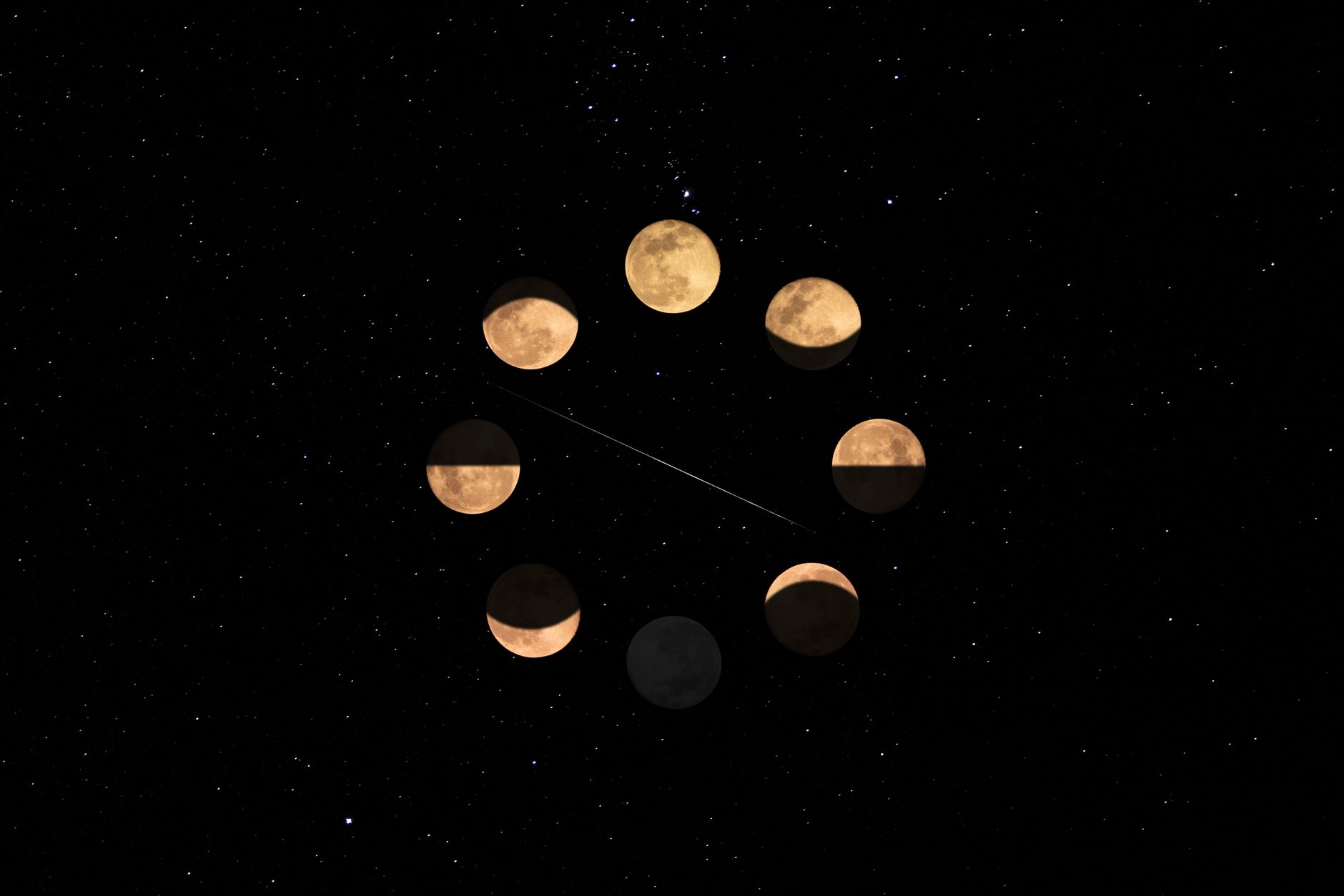
The term ‘super new Moon’ has been gaining attention in recent times, but what does it mean and how is it different from a regular new Moon? To understand this phenomenon, let’s first delve into the basics of the lunar cycle and how it influences our planet.
What is a New Moon?
A new Moon occurs when the Moon is positioned between the Earth and the Sun, making it invisible from our planet. This phase happens when the Moon’s orbit brings it to the same side of the Earth as the Sun, resulting in the side of the Moon facing the Earth not being illuminated by the Sun.
What Makes a Super New Moon?
A super new Moon is a new Moon that occurs when the Moon is at its closest point to the Earth, also known as perigee. This proximity to the Earth results in a slightly stronger gravitational pull on our planet, which in turn affects the tides. The term ‘super’ in this context refers to the Moon’s closeness to the Earth, rather than its visibility or brightness.
It’s essential to note that the term ‘super new Moon’ is not an official astronomical term, but rather a colloquialism used to describe this specific alignment of the Moon and Earth. Astronomers typically refer to this event as a ‘perigean new Moon’.
Effects on the Tides
The gravitational pull of the Moon on the Earth’s oceans is the primary cause of the tides. When the Moon is at perigee, its gravitational pull is slightly stronger, resulting in more pronounced tidal fluctuations. This can lead to higher high tides and lower low tides, a phenomenon known as ‘spring tides’. The increased tidal range can cause more significant coastal erosion and flooding in some areas.
While the effects of a super new Moon on the tides are noticeable, they are not drastic. The difference in tidal range between a super new Moon and a regular new Moon is relatively small, and the impact on coastal areas is typically minimal.
Observing the Super New Moon
As mentioned earlier, a super new Moon is not visible from the Earth, as the side of the Moon facing our planet is not illuminated by the Sun. However, the effects of the super new Moon on the tides can be observed, and astronomers can track the Moon’s orbit and proximity to the Earth.
In conclusion, a super new Moon is a new Moon that occurs when the Moon is at its closest point to the Earth, resulting in a slightly stronger gravitational pull and more pronounced tidal fluctuations. While it may not be visible, its effects on the tides are noticeable, and understanding this phenomenon can help us better appreciate the complex interactions between the Earth, Moon, and Sun.
Some key points to consider when thinking about the super new Moon include:
- The super new Moon is not an official astronomical term, but rather a colloquialism used to describe the Moon’s closeness to the Earth.
- The effects of the super new Moon on the tides are noticeable, but not drastic.
- The term ‘super’ in this context refers to the Moon’s proximity to the Earth, rather than its visibility or brightness.
As we continue to explore and learn more about the lunar cycle and its effects on our planet, the super new Moon serves as a reminder of the complex and fascinating interactions between the Earth, Moon, and Sun.
Source: bbc.com.






Be First to Comment