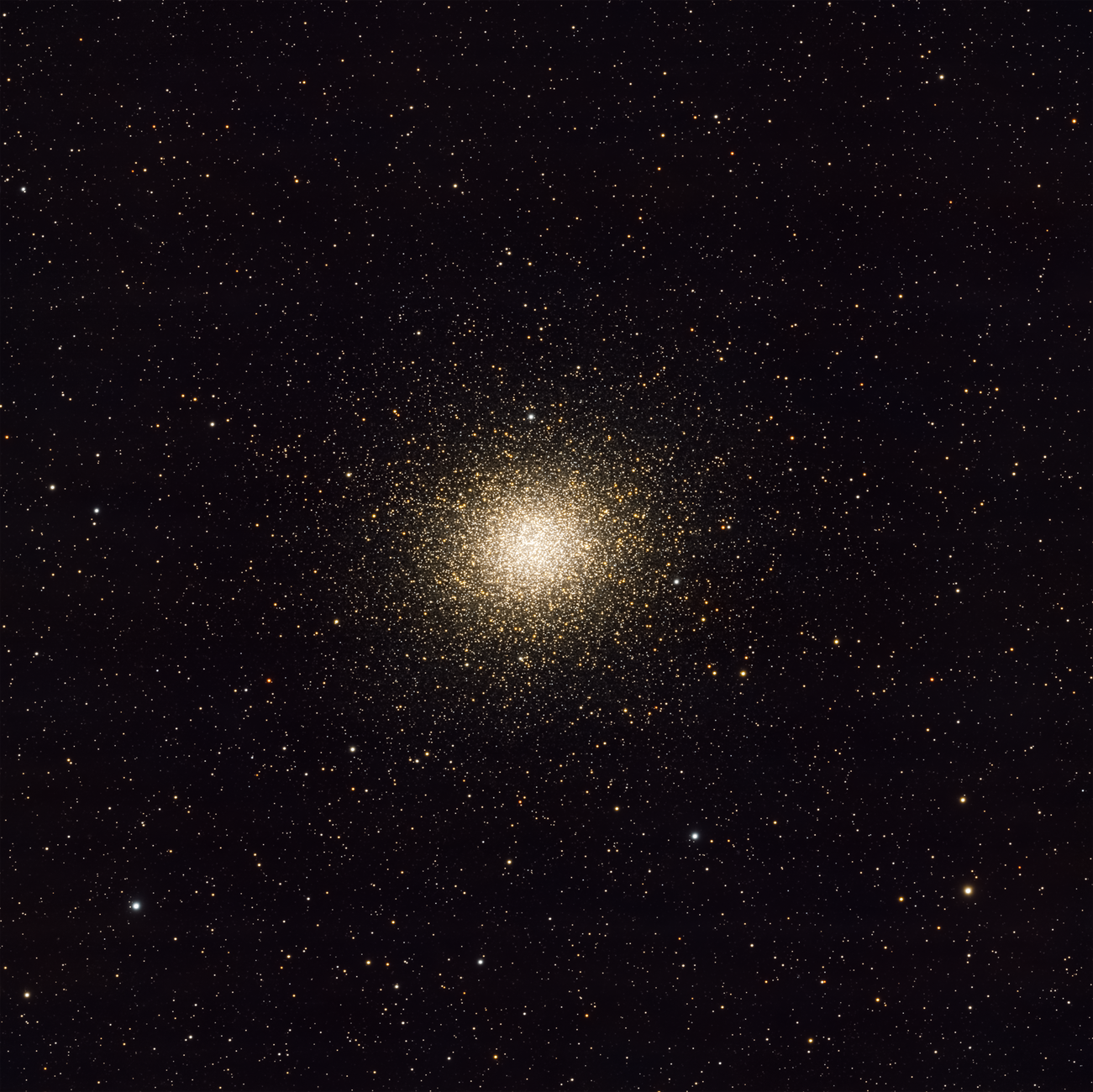
The Hubble Space Telescope has captured a stunning image of the globular cluster NGC 6723, also known as the Chandelier Cluster. This sparkling scene features a collection of tens of thousands to millions of stars, all tightly bound together under the influence of gravity. Globular clusters like NGC 6723 contain some of the oldest stars in our galaxy, with ages that often exceed 10 billion years old.
There are more than 150 globular clusters in our galaxy, though there may be others still undiscovered, hidden from view by dust or densely packed fields of stars. These clusters have ages that often exceed 10 billion years old, and some are nearly as old as the universe itself. Astronomers think globular clusters are some of the first structures that formed in our galaxy, coalescing potentially billions of years before the thin disk of stars in which our Sun orbits.
Globular Clusters: Formation and Evolution
Astronomers initially thought that all stars in a globular cluster formed at the same time in a single flourish of star formation. This would mean that all stars in a globular cluster would be the same age and made of the same mixture of chemical elements. However, thanks to observations from telescopes like Hubble, researchers know that these seemingly simple stellar populations have more complex histories than originally thought.
Hubble first observed NGC 6723 as part of an ambitious survey dedicated to demystifying the properties of globular clusters in our Milky Way galaxy. In this observing program, researchers used Hubble to study 65 globular clusters in our galaxy in visible and near-infrared light. That data allowed researchers to study everything from the ages of globular clusters to the process through which massive stars sink to the center of a star cluster and lower-mass stars drift toward the cluster outskirts.
Key Findings and Implications
This survey has been immensely scientifically valuable, and these observations have inspired several hundred published research papers. In a later observing program, researchers set their sights again on many of these same clusters, including NGC 6723. This time, they used Hubble’s unique sensitivity to ultraviolet light to detect the subtle variations in chemical composition between the stars of globular clusters and determine the age spread among the clusters’ stars.
- Researchers found evidence of two closely-spaced periods of star formation, the second occurring within 634 million years of the first.
- This finding suggests that globular clusters may have formed through a more complex process than previously thought.
- The discovery of multiple star formation periods in globular clusters has significant implications for our understanding of the early universe and the formation of galaxies.
Conclusion and Future Directions
Thanks to these findings, astronomers are on the path to understanding how and when globular clusters formed — and Hubble observations of celestial chandeliers like NGC 6723 are lighting the way. As researchers continue to study globular clusters, they may uncover even more secrets about the universe’s beginnings and evolution. The study of globular clusters is an active area of research, with many questions still to be answered. What can we learn from the chemical composition of stars in globular clusters? How do globular clusters form and evolve over time? What role do globular clusters play in the formation of galaxies?
Future Research Directions
Future research on globular clusters will likely involve continued observations with the Hubble Space Telescope and other telescopes, as well as the development of new theoretical models to explain the formation and evolution of these ancient star formations. By studying globular clusters, astronomers can gain insights into the early universe and the formation of galaxies, and shed light on the mysteries of the cosmos.
Source: science.nasa.gov.




Be First to Comment